
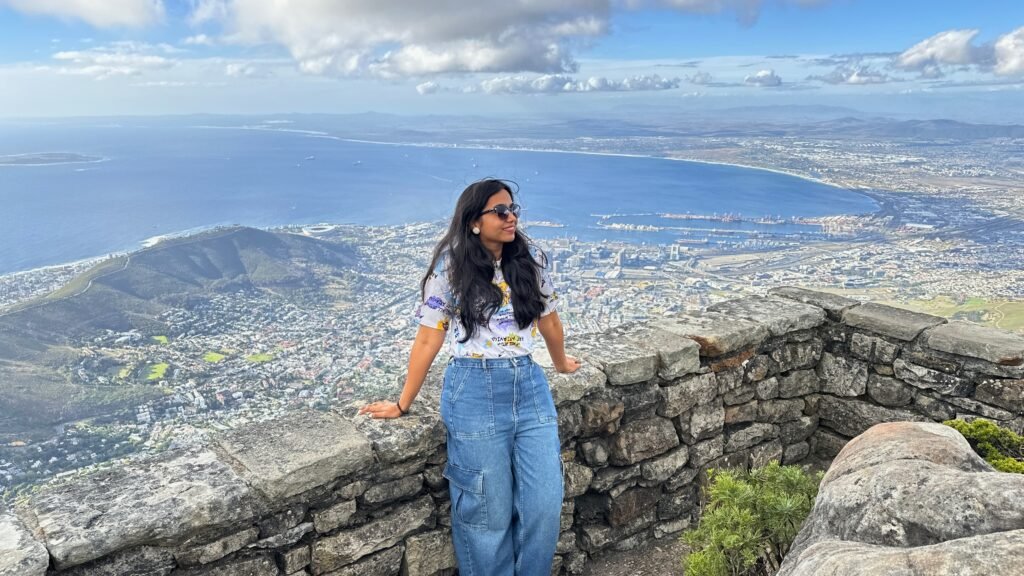
Visible from almost every corner of the city, this magnificent flat-topped mountain is one of the first things that catches your attention when in Cape Town, South Africa. It is easily one of the most iconic landmarks in the world, and officially one of the New 7 Wonders of Nature.
Standing at over 1,000 meters above sea level, this flat plateau stretches roughly three kilometers from one end to the other, framing the Atlantic Ocean on one side and the bustling city bowl on the other. Its unusual shape is what makes it so distinctive. Unlike the sharp peaks and pointed summits we usually associate with mountains, this one has a remarkably flat top, stretching for approximately three kilometres from side to side.
Table Mountain is part of a much larger mountain chain that stretches along the Cape Peninsula. It is flanked by Devil’s Peak on one side and Lion’s Head on the other, creating a spectacular natural setting around Cape Town. If you are visiting South Africa, skipping this mountain simply isn’t an option!
The History and Significance of Table Mountain
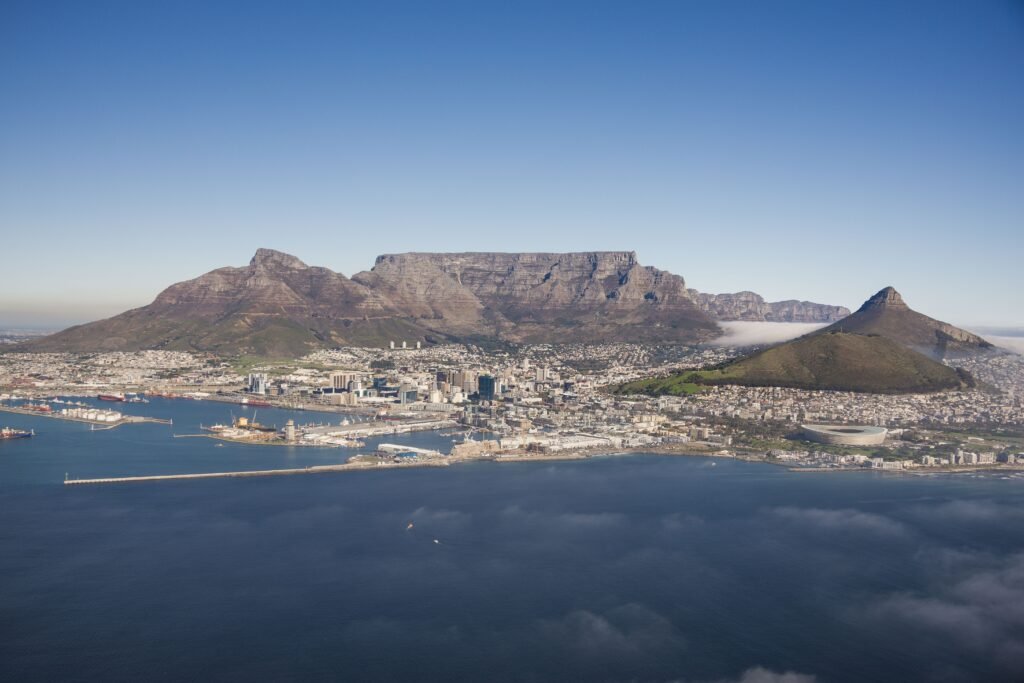
Beyond its beauty, Table Mountain has an interesting history that goes back thousands of years. Its original Khoekhoe name is Hoerikwaggo, meaning ‘Mountain in the Sea’. Geological evidence points to a presence in the area dating back approximately 200 million years. That makes it vastly older than the Himalayas or the Rockies. Before being compressed, uplifted, and eroded into a plateau, it sat near the bottom of an ancient sea, which explains the flat layers of hard quartzitic sandstone you walk across today.
It also played an important role in maritime history. For sailors travelling along the southern coast of Africa, Table Mountain was a significant landmark. Its distinctive shape made it easier for passing ships to identify the Cape and navigate towards Table Bay.
Portuguese navigator António de Saldanha is credited with the first recorded European ascent in 1503. He named it Taboa do Cabo, meaning Table of the Cape. Over the centuries, the mountain became an important geographical reference point for explorers and sailors travelling between Europe and Asia.
Today, Table Mountain is a symbol of Cape Town’s identity. It also forms part of the Cape Floral Region Protected Areas, a UNESCO World Heritage Site recognised for its extraordinary plant diversity. In 2011, Table Mountain was officially recognised as one of the New 7 Wonders of Nature, placing this South African landmark among seven remarkable natural sites across the world!
The Cable Car Ride: A Beautiful Way to Reach the Summit
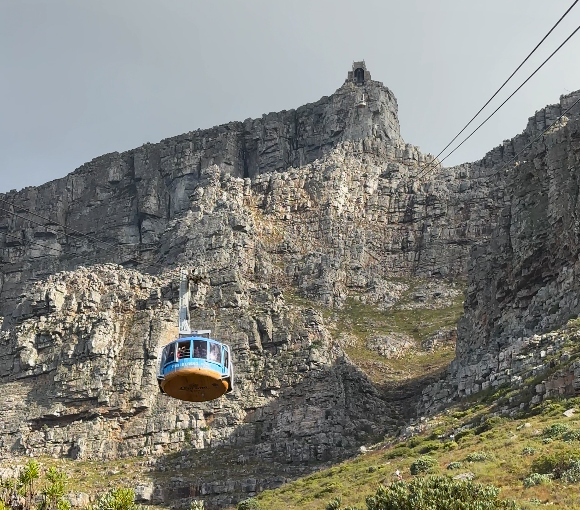
Getting up there is half the fun. While plenty of energetic hikers tackle steep trails like Platteklip Gorge on foot, I opted for the famous Table Mountain Aerial Cableway – easy and certainly a mesmerizing way to get to the top.
Thanks to Cape Town’s Hop-on Hop-off bus service, getting to Table Mountain was very convenient. I travelled directly from 81 Long Street to the Lower Cableway Station. The bus also gave me the flexibility to explore Cape Town at my own pace, hopping off at different attractions and enjoying the city breeze and beach views from an open-top deck.
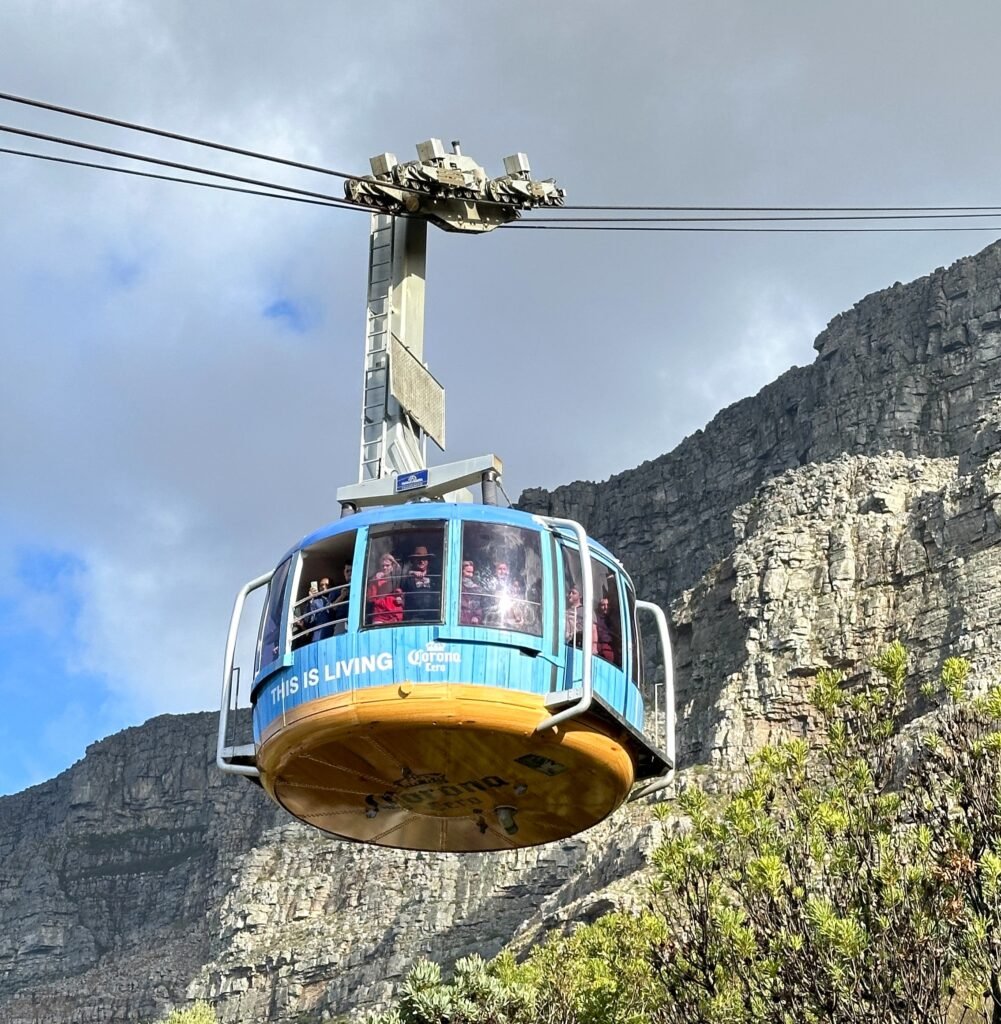
After grabbing my ticket, I headed towards the cableway; it has been operating since 1929 and has become an attraction in its own right. The ride takes only five minutes in its 704-meter vertical ascent, but there is plenty to see during this short journey.
The best part? The floor of the cabin slowly rotates a full 360 degrees as you climb, meaning nobody has to fight for a window spot! Looking down at Cape Town from the moving cable car is quite an experience. You can see the city, the surrounding mountains, and the ocean coming together in one magnificent landscape. And trust me, magnificent – it is!
What to See at the Top of Table Mountain
Stepping out of the upper cable station hit me with two things at once: crisp, cool mountain air that made me wish I had brought a sweater with me. And a view so wide it took my eyes a second to process.
From different sections of the summit, you can admire Cape Town’s city centre, Table Bay, the Atlantic Ocean and the surrounding mountain ranges. On a clear day, the views extend towards Robben Island, the historic island where Nelson Mandela was imprisoned for many years. You can also spot Lion’s Head, Signal Hill and the coastline around Camps Bay.
As an ocean baby, I spent half my time up there just staring down at the deep blue Atlantic curling right into the white-sand edges of Camps Bay and Clifton. Seeing that endless stretch of water meet the rugged coastline from a thousand meters in the air gave me total goosebumps!
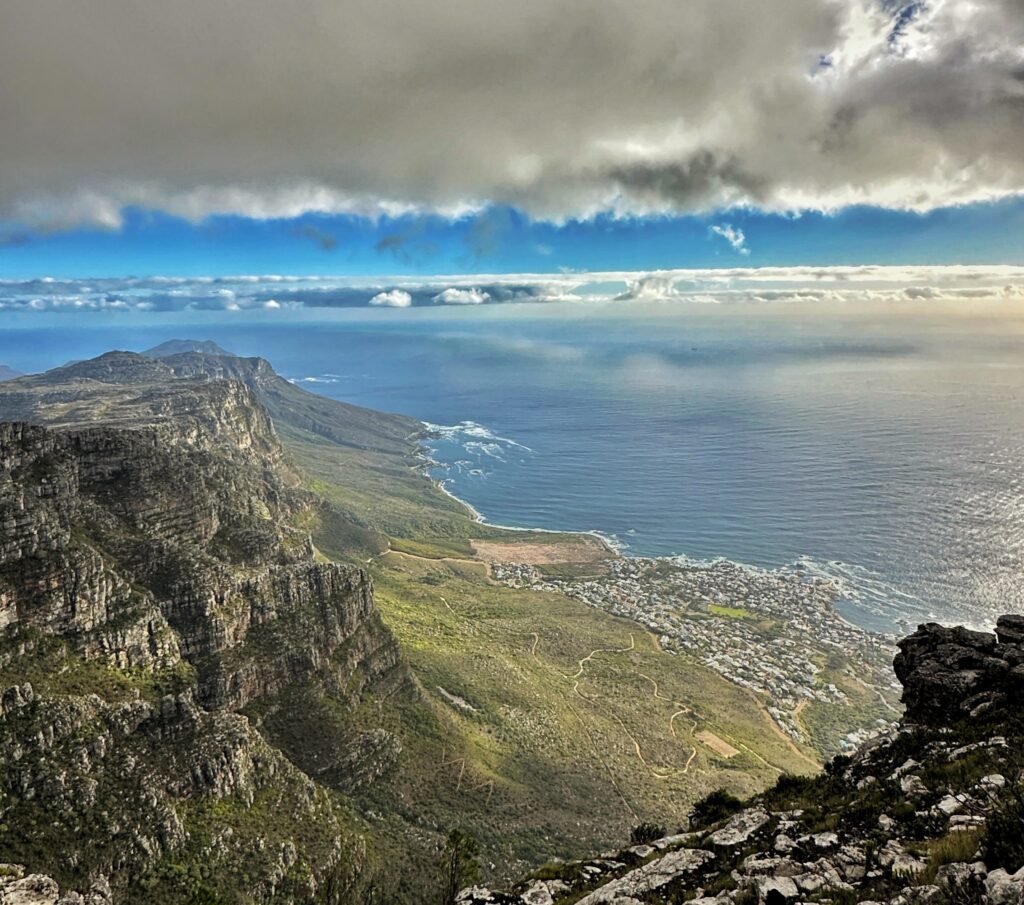
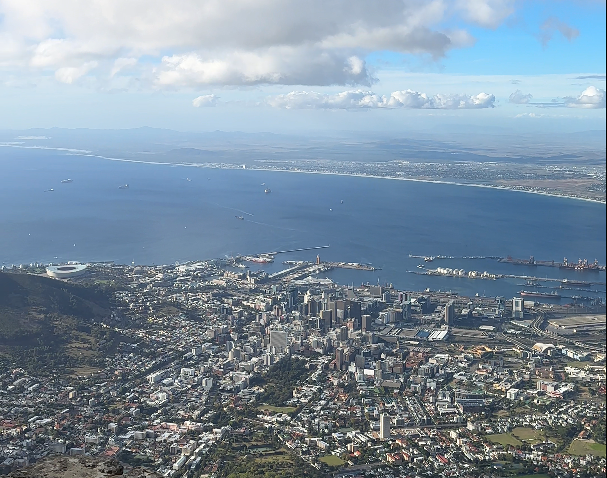
Another interesting landmark at the summit is Maclear’s Beacon, the highest point on Table Mountain. It is a stone cairn built in 1865 by astronomer Sir Thomas Maclear for trigonometrical surveying.
Even if you aren’t a plant nerd, the greenery on Table Mountain grabs your attention. The mountain is part of the Cape Floral Region, one of the richest plant biodiversity areas in the world. The vegetation here is known as fynbos, an Afrikaans word meaning “fine bush”, a distinctive type of shrubland found mainly in South Africa’s Western Cape. The King Protea, South Africa’s national flower, is particularly associated with this region. The mountain is home to more than 1,400 plant species in the broader Table Mountain area, including many that are found nowhere else in the world.
One of the most photographed sights in Cape Town is the famous Table Mountain ‘Tablecloth’. It happens when the south-easterly wind pushes moist air up the mountain, causing thick white clouds to roll up and spill smoothly over the flat edge.
There is even a local legend associated with this phenomenon. A retired pirate named Jan van Hunks used to smoke his pipe on the slopes of Devil’s Peak. He supposedly entered a smoking competition with the Devil himself, and the clouds of smoke produced during their contest became the famous tablecloth. Of course, the actual explanation is meteorological, but the legend adds a lovely touch to the mountain’s character.
I have seen countless beautiful landscapes on my travels, but Table Mountain gave me a perspective of Cape Town that I will always remember. Perhaps it was the sheer scale of the mountain, or the way the city seemed to stretch endlessly, or the shades of waves from such a height that made my experience so special. Table Mountain is more than a famous landmark or another attraction to tick off your list. For me, it was a chance to appreciate just how beautiful this part of the world is.
And honestly, if you love the ocean and spectacular landscapes as much as I do, you will understand why I found it so hard to leave the viewpoint.
Read More: Travelogue



Leave a Reply