
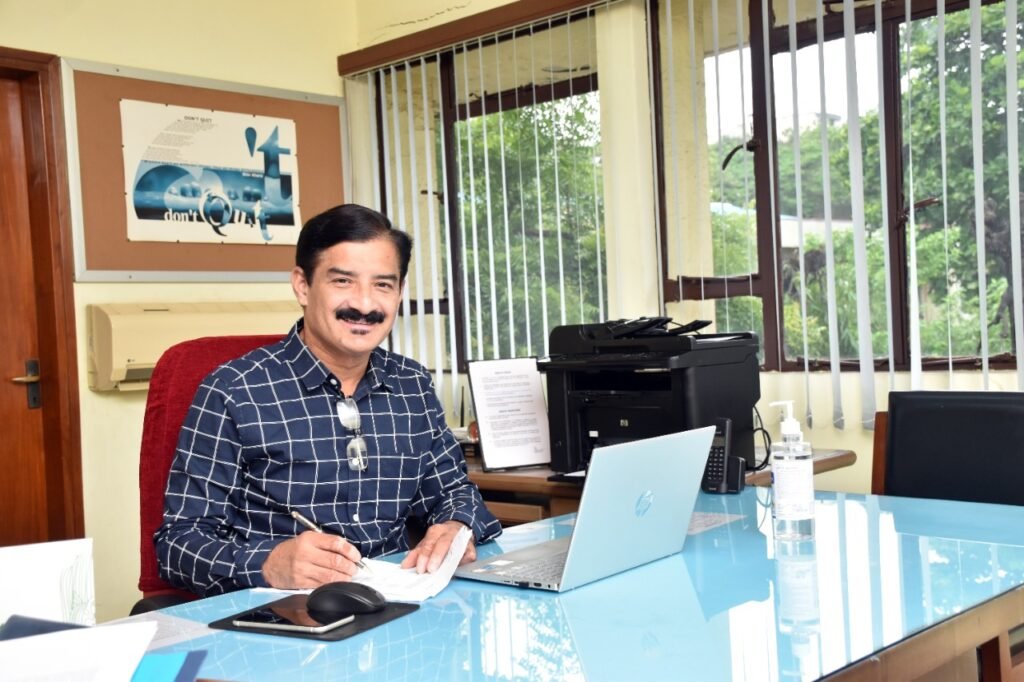
The recent Indian budget 2026 brought into focus the Indian textile market which prioritized the textile sector with a major focus on employment, exports, and sustainability. Add to this the proposed India–EU Free Trade Agreement (FTA), which is poised to significantly boost the Indian textile sector by eliminating tariffs (up to 12% previously) on textiles and apparel, providing duty-free access to the $263.5 billion EU market. To get more insights Chandragupta Amritkar decided to interact with the soft-spoken Dr. Sreekumar, Director of The Bombay Textile Research Association, Mumbai. A Ph.D. in Polymer and Fiber Science from IIT Delhi, India and post-doctoral training at Georgia Institute of Technology, Atlanta, USA his experience brought out some interesting thought process.
What is the current scenario of India as an exporter of textiles and apparel in the world?
India today ranks among the world’s leading exporters of textiles and apparel, supported by a rare advantage—a fully integrated value chain that spans fibres, yarns, fabrics, garments, and technical textiles. This end-to-end ecosystem provides resilience, adaptability, and depth, enabling Indian manufacturers to respond effectively to changing global demand patterns.
In recent years, focused government initiatives have significantly strengthened this position. Programmes such as the Production Linked Incentive (PLI) scheme, PM MITRA Mega Textile Parks, and the National Technical Textiles Mission (NTTM) have accelerated the sector’s transformation from volume-centric exports to technology-driven, value-added manufacturing. These initiatives are helping the industry move up the global value chain, with greater emphasis on innovation, performance, and compliance.
As is often observed within the sector, India is steadily moving from scale to sophistication in global textiles. This transition is being reinforced by strong institutional support. Research and testing organisations have played a crucial enabling role, particularly in advanced materials. Under the NTTM, BTRA successfully developed India’s first indigenous carbon fibre precursor, marking a significant step toward self-reliance in high-performance materials and expanding India’s footprint beyond conventional textile segments.
How is India’s share of export to Europe?
The European Union remains one of India’s most important and stable export destinations for textiles and apparel. Indian products—especially home textiles, apparel, and made-ups—are widely accepted across European markets for their quality, consistency, and increasing alignment with responsible production practices.
While India already maintains a strong presence in Europe, there is considerable scope for further growth, particularly in technical textiles and sustainable product categories. European buyers are increasingly seeking long-term partners capable of meeting stringent regulatory requirements while offering reliable manufacturing capabilities. As industry observers note, Europe increasingly looks for partners who can deliver both compliance and capability, and India is aligning well with this expectation.
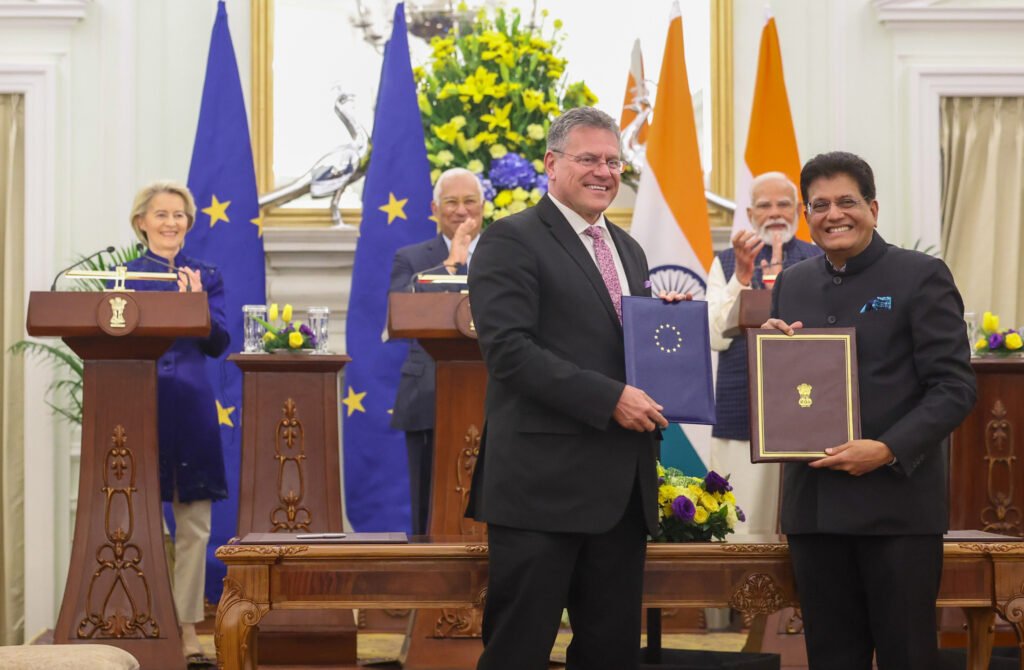
The proposed India–EU Free Trade Agreement is expected to further strengthen trade ties, improve market access, and enhance India’s competitiveness in the European market.
The EU aims for sustainability by 2030. Are Indian exporters ready to adapt to new regulations?
The EU’s sustainability agenda is reshaping global textile trade, and Indian exporters are responding with growing preparedness. Many manufacturers have already begun integrating renewable energy, water-efficient processing technologies, and sustainable raw materials into their operations.
Institutional research and development support has played a key role in translating sustainability policies into practical solutions. Developments such as flame-retardant fabrics, alkaline-resistant polyester, and sustainable sanitary napkins demonstrate how Indian innovation is addressing safety, durability, and environmental responsibility in parallel.
As one industry perspective highlights, sustainability in India is becoming structured and science-driven, not ad hoc. This shift positions Indian exporters well to meet evolving European regulations while maintaining competitiveness.
What is the EU Ecodesign for Sustainable Products Regulation (ESPR)?
The ESPR is a key pillar of the EU’s sustainability framework. It aims to ensure that products entering the European market are designed to be durable, repairable, recyclable, and resource-efficient.
For the textile sector, ESPR shifts the sustainability focus upstream—towards product design, material selection, and lifecycle considerations. Indian exporters who adopt these principles early will gain a strategic advantage, as compliance increasingly becomes a prerequisite for market entry. As widely acknowledged, designing for sustainability is no longer optional; it is becoming a market entry requirement.
Can you elaborate on the Digital Product Passport (DPP) system?
The DPP is intended to enhance transparency across the value chain by digitally recording a product’s material composition, origin, processing methods, chemical compliance, and recyclability.
For Indian exporters, implementing DPP will require stronger traceability and data management systems. However, it also presents a valuable opportunity to demonstrate compliance, build buyer confidence, and differentiate credible manufacturers in the European market. As stakeholders note, transparency will reward credible manufacturers, and India has the institutional framework to support this transition.
India hosts globally significant textile recycling hubs. How would exports from India’s recycled textile industry to the EU benefit the country?
India’s established recycling hubs, such as Panipat and Tiruppur, provide the country with a natural advantage in circular textiles. With the EU mandating higher recycled content in textile products, India is well-positioned to supply recycled fibres, yarns, and fabrics to European markets.
Beyond export growth, this strengthens domestic sustainability and circular infrastructure. Innovations such as geogrid-reinforced pavements illustrate how recycled and technical textiles can extend service life while reducing material consumption. As often noted, circularity is not new to India—it is being strengthened with technology and standards.
In parallel, India is enhancing its global testing capabilities. BTRA is establishing the country’s first aircraft interior textile testing facility, enabling fire, smoke, and toxicity compliance testing within India. This reduces dependence on overseas testing and supports participation in high-value global supply chains.
About Bombay Textile Research Association (BTRA)
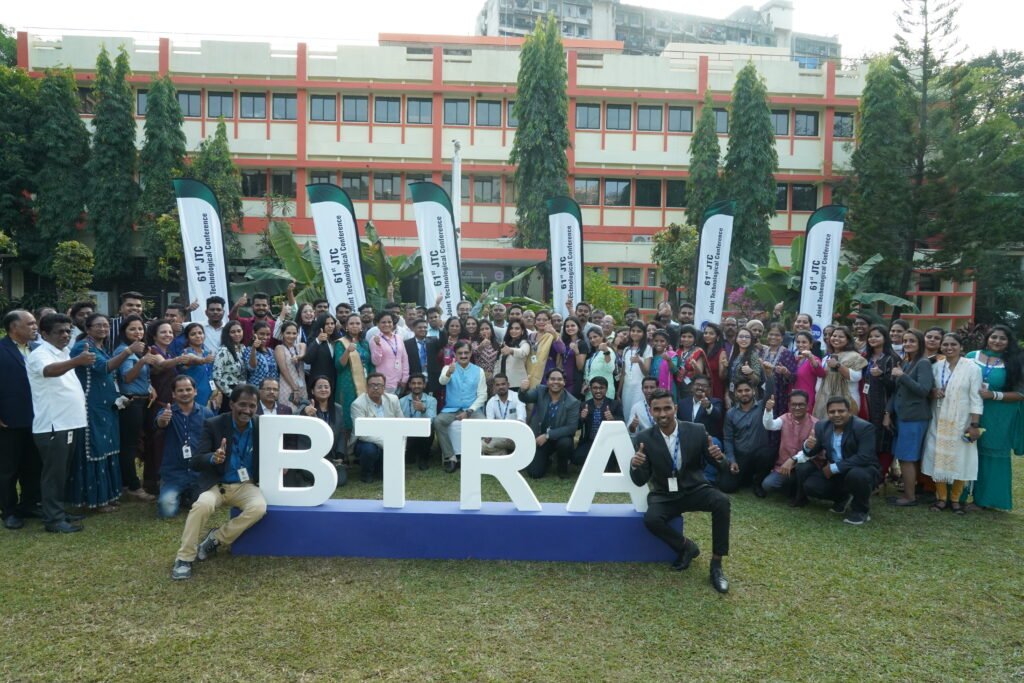
In the immediate aftermath of India’s Independence, the nation faced a critical vacuum in scientific research and technical expertise within its textile sector — then one of the most vital pillars of the economy. Recognizing the urgent need to build indigenous capabilities and strengthen technical infrastructure, the Bombay Textile Research Association (BTRA) emerged as a visionary institution to bridge this gap and lay the foundation for research-driven industrial growth.
Proposed in 1948 under the Ministry of Commerce, The Bombay Textile Research Association (BTRA) was formally established in 1954 with equal (50:50) financial contribution from the Government of India and the Mill Owners’ Associations. This unique public–private partnership model reflected a shared national commitment toward modernization, technological advancement, and self-reliance in textiles.
BTRA was established in the heart of Mumbai on a sprawling 22 acre campus, strategically located within India’s historic textile hub. Today, the campus houses advanced laboratories, pilot plants, testing facilities, training infrastructure, an incubation centre, and specialized research centres dedicated to serving the evolving needs of the textile and technical textile sectors.
In recent years, BTRA has strategically expanded into advanced and high-performance materials, achieving a major milestone with the development of India’s first indigenous carbon fibre precursor. The association is actively advancing research in next-generation high-strength fibres such as Ultra-High Molecular Weight Polyethylene (UHMwPE) and aramid fibres to strengthen domestic capabilities in lightweight and performance-critical applications. Alongside these innovations, BTRA has contributed to the development of flame-retardant fabrics, alkaline-resistant polyester fabrics, geogrid-reinforced pavement systems, sustainable products, and protective textiles. Further reinforcing its leadership in technical textiles,
With over seven decades of service, BTRA stands as a symbol of India’s scientific resilience, industrial modernization, and technological leadership in textiles and technical textiles.





Leave a Reply