
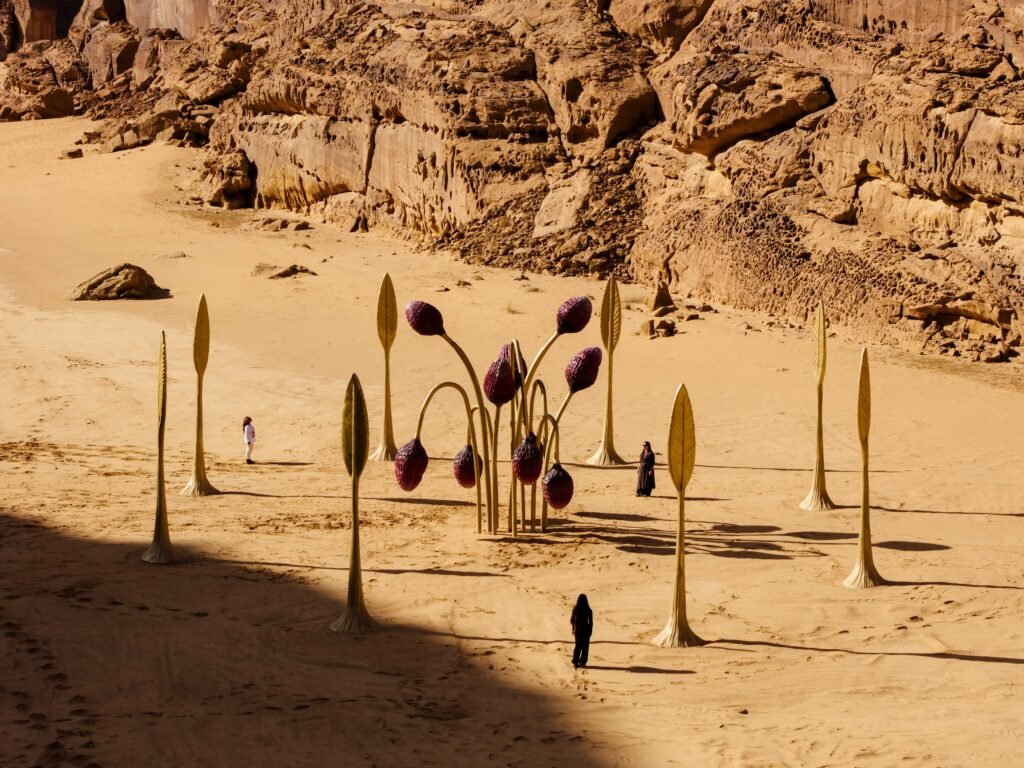
At the heart of Saudi Arabia’s cultural awakening, AlUla is rapidly emerging as a global destination for contemporary art, heritage, and creative innovation. During the Desert X AlUla Festival, Pooja Amritkar had the opportunity to sit down with Sumantro Ghose, Artistic Programming Director for Arts and Creative Industries at the Royal Commission for AlUla. With decades of international experience in arts programming and cultural development, Ghose is playing a pivotal role in shaping AlUla’s creative ecosystem.
In this exclusive interview, Ghose shares insights into artist residencies, international partnerships, commitment to sustainability in heritage landscapes, and the long-term vision for art in the desert. This in-depth discussion offers insights into one of the Middle East’s most ambitious cultural transformations.
Q: AlUla is growing as an arts hub. How do you plan to boost this for young, aspiring artists and professionals in the creative sector?
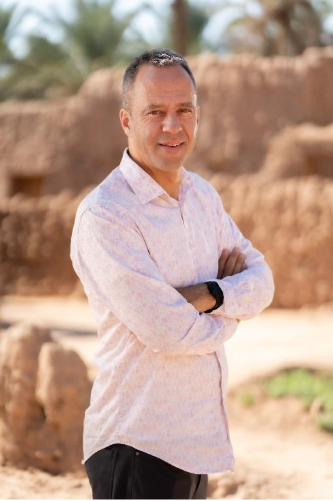
Sumantro Ghose: For artists, one of our key initiatives is the artist residency program. We run a Visual Arts residency and a Design Edition once a year. Each time, we invite six artists or designers to AlUla. This is an international residency program, so we bring together Saudi, regional, and international creatives. For example, we previously hosted Studio Raw Material, a collective from India. This kind of initiative is one of the main ways we are developing AlUla as an arts hub.
Another important way we’re growing is through large-scale partnerships and festivals, such as the AlUla Arts Festival. A founding partnership for this has been with Desert X. What began as Desert X in California later expanded to become Desert X AlUla, which is now a biennial exhibition. Over time, we’ve seen Desert X AlUla gain strong international recognition.
We’re also building partnerships with major cultural institutions, such as collaborations connected to The King’s Foundation School of Traditional Arts and Centre Pompidou, as part of our long-term vision for museums and craft development. Alongside these large-scale partnerships, we continue to invest in smaller initiatives like artist residencies.
At the same time, we’re taking a broader approach through cultural assets. By cultural assets, we mean permanent destinations like museums and public art spaces. One of the major projects we’re working toward is Wadi AlFann, the Valley of the Arts, a large-scale land art destination where we commission artists from Saudi Arabia and around the world. We’re also developing a new contemporary art museum in partnership with Centre Pompidou.
Another key area is the AlJadidah Arts District. There, we have Madrasat Addeera, which is an artisanal training center for the local community. It focuses on traditional skills such as basket weaving, pottery, stone carving, and wood carving.
When you look across the creative industries, whether it’s design, fashion, visual art, sculpture, or music, we now have initiatives supporting each of these disciplines. Some run year-round, while others take place during the festival period.
Q: Sustainability and ecology are major concerns, especially when working in ancient landscapes. How do you manage that balance?
Sumantro Ghose: I think we manage it well, and one important thing to understand is that art and creativity in this landscape are not new, they go back thousands of years. If you look at Hegra, for example, the façades of the tombs show influences from Greek, Roman, Egyptian, and Nabataean traditions. These were created by local communities over centuries.
You also see thousands of ancient inscriptions across the region, many of them more than 2,000 years old. Jabal Ikmah, in particular, is an incredible site for this. So people have been shaping and creating art in this landscape for millennia. What we’re doing now is continuing that tradition in a contemporary way, but in a very considerate and limited manner.
AlUla covers around 20,000 square kilometers, while Wadi AlFann, our dedicated art zone, will be about 65 square kilometers. When you visit Desert X, you’ll notice that the artworks are installed in a way that leaves no trace once they are removed.
Q: So these are temporary installations?
Sumantro Ghose: Yes, they are temporary in the landscape. After the exhibition, the works are either relocated, returned to the artists, or acquired by international collectors and institutions, depending on the piece. Some works are intentionally temporary and exist in dialogue with the natural environment.
We also have sustainability principles and guidelines in place. One thing you’ll experience at Desert X is that walking is part of the journey. While we do have some golf carts available, the real experience is moving through the landscape, between artworks, under the open sky, surrounded by mountains. The environment itself is a key part of the exhibition.
Q: From an arts and tourism perspective, how are you positioning AlUla as a year-round cultural and tourism destination?
Sumantro Ghose: The cultural assets we’re building are designed to be open all year. That’s very important for us. In fact, we already have year-round initiatives in place.
Madrasat Addeera, for example, is open throughout the year and is located in the AlJadidah Arts District. It functions as an artisanal training center and is part of our permanent cultural offering. Design Space AlUla is another year-round initiative. We’ve also enabled private sector partnerships that will continue to grow over time.
Desert X AlUla is part of our pre-opening program for Wadi AlFann, which will become the permanent “Art in the Landscape” destination. Through Desert X, we’ve learned a great deal about placing art in natural settings, how to work with artists, how to guide visitor experiences, and how to responsibly remove artworks afterward.
Q: As a first-time visitor coming to AlUla Arts, what would make the experience more engaging?
Sumantro Ghose: What I would say first is that the festival is incredibly diverse. That’s something we’re really proud of. We have initiatives we’ve been building for a long time, like Art in the Landscape and our craft programs.
My suggestion to visitors is to enjoy the big, spectacular experiences like Desert X, but also take time to wander through the AlJadidah Arts District and discover the smaller performances and exhibitions. Even better, join one of the workshops. So instead of only looking at art, why not make some as well? These workshops are part of the festival and are a great way to get hands-on.
Whenever we bring international artists to AlUla, including Desert X participants, we encourage them to give workshops for the local community. For example, last year, Aditya Prakash, the Indian musician, also engaged with the community through workshops and performances.
Ultimately, AlUla is all about the connection between artists, visitors, the land, and the stories that live here.
AlUla Arts Festival 2026 runs from January 16 to February 14, 2026



Leave a Reply