
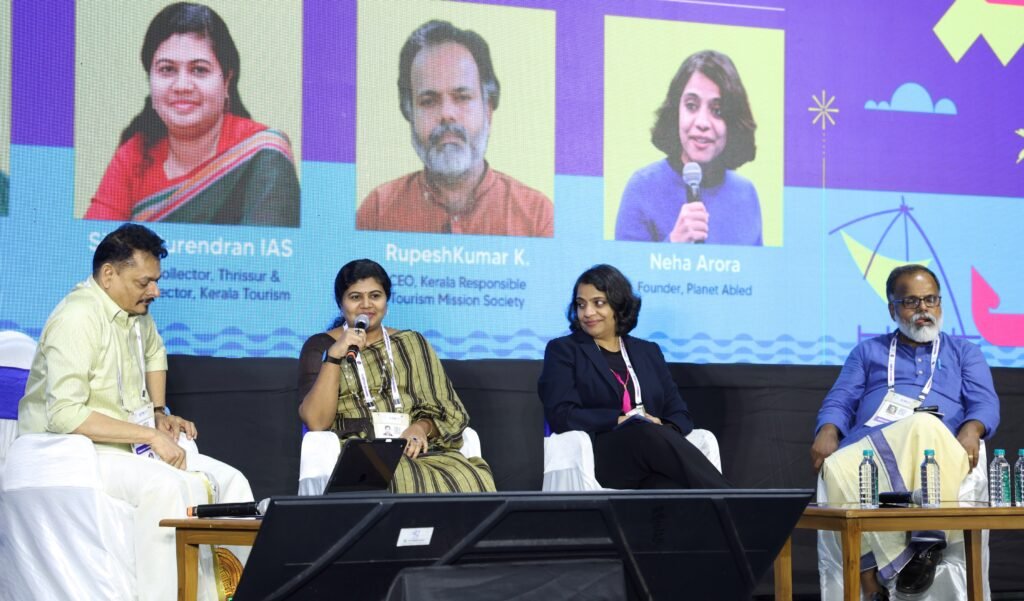
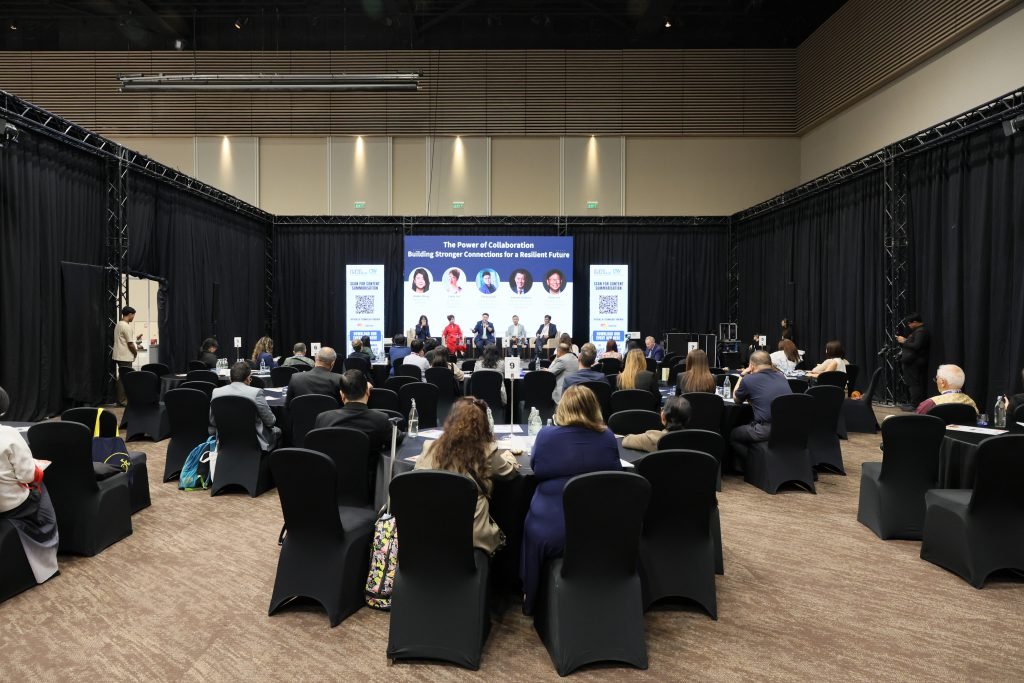
Kerala Tourism is placing greater focus on making travel more accessible, inclusive and welcoming for everyone. At KTM 2026, tourism experts called for better planning, trained professionals and improved facilities to ensure that tourism destinations can meet the needs of travellers with disabilities, women and other groups.
Experts at the seminar stressed that accessibility should be considered at every stage of tourism planning, rather than being limited to ramps, wheelchairs or specially designed hotel rooms.
Thrissur District Collector and former Tourism Director Smt Shikha Surendran said tourism projects need to take into account the requirements of people with both physical and mental disabilities. She noted that projects aimed at improving accessibility are often designed by officials from different departments, making awareness, training and capacity building essential.
She also called for tour and travel operators, hotel owners and employees, taxi drivers and other tourism stakeholders to receive training in disability-friendly practices. Accessibility, she said, should extend across public transport, toilets, hotel rooms and other facilities used by travellers.
Digital information can also play an important role in helping travellers plan accessible trips. Smt Shikha Surendran suggested developing digital information systems that clearly explain the facilities available at tourism destinations, along with maps containing accurate accessibility information.
She also highlighted the need for tourism destinations to undergo regular accessibility and inclusion audits. Gender audits have already been conducted at 72 tourism destinations in Kerala, with the destinations ranked according to their performance. In some locations, only 16 to 20 per cent of gender equality standards are being met.
“This needs to change,” she said, adding that the government and private sector should explore ways to work together to provide better facilities for persons with disabilities while also strengthening the tourism sector.
Responsible Tourism Mission Society CEO Shri Rupesh Kumar K said responsible tourism has always focused on making destinations better places to live in as well as visit. He highlighted Kerala’s efforts towards gender equality and women-friendly tourism, including special tourism packages for women.
Of the 26,000 units under Kerala’s Responsible Tourism initiative, 18,500 are run by women’s collectives. According to Shri Rupesh Kumar K, this demonstrates how the principles of inclusion can be incorporated into tourism at the grassroots level.
“Kerala has always been at the forefront of embracing and implementing new ideas,” he said, adding that the state can set an example by developing tourism that is accessible to everyone, just as it has done through its focus on women-friendly tourism.
Neha Arora, founder of Planet Abled, stressed the importance of designing travel experiences that are accessible and inclusive from the beginning. She said tourism guides should receive adequate training and be equipped to offer travellers with disabilities the same standard of interpretation provided to other visitors. Accessibility also needs to extend to digital tourism content. Videos promoting tourism destinations should consider the needs of people with visual impairments, hearing disabilities and intellectual disabilities, she said.
Neha Arora also pointed to the limited availability of accessible hotel accommodation, noting that very few hotels currently have rooms that are suitable and convenient for persons with disabilities. She called for urgent attention to improving accessible accommodation across the hospitality sector.
The discussions at KTM 2026 highlighted that accessible tourism requires more than physical infrastructure. From trained tourism professionals and accessible transport to accurate digital information, hotel facilities and inclusive destination experiences, accessibility needs to be considered across the entire travel journey.
The seminar was moderated by KTM Society Secretary S. Swaminathan. Former KTM President Riyas Ahmed welcomed the participants to the session.
KTM 2026 highlighted that inclusive tourism is not simply about adding facilities, but about creating destinations where every traveller can access, experience and enjoy the journey with greater ease.
Read More: Events & Updates



Leave a Reply