
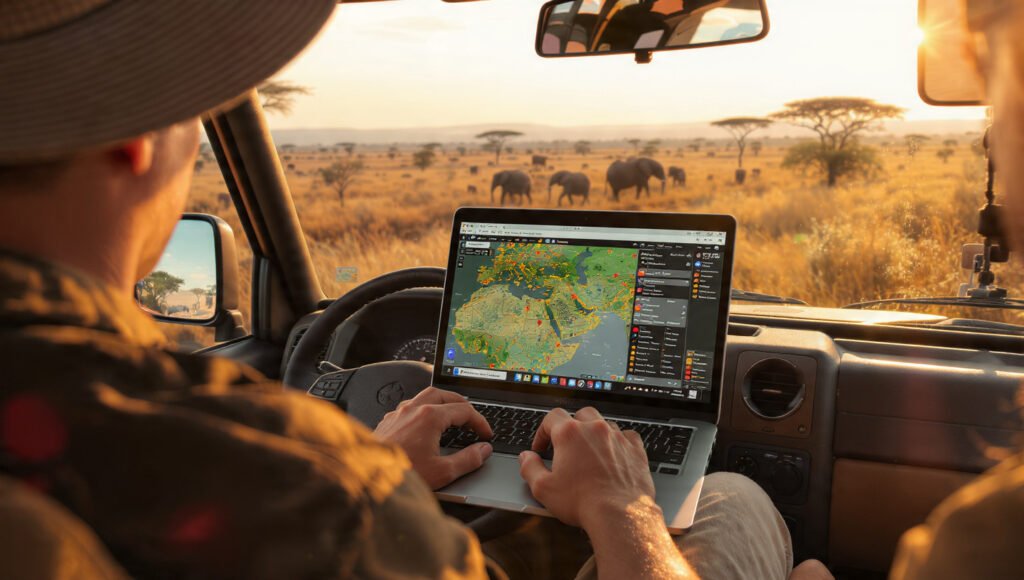
Honestly, back in the day, heading out on an African safari was the perfect excuse to disappear. You could just tell your boss, “Hey, I’m off the grid, don’t bother emailing,” and nobody would question it. The Maasai Mara, Samburu—those were spots for dodging emails, not places to check Slack or refresh your inbox every few minutes.
But now? A totally different story. With digital nomads on the rise (and everyone suddenly working remotely), there’s a new kind of traveler: the Tech-Savvy Explorer. These people aren’t choosing between landing a client or catching a wildebeest migration. Why keep your sights so narrow when you can do both?
People always talk about Kenya’s safaris and lions. That’s the usual story. But here’s the thing—Kenya’s buzzing with a tech scene that barely gets any attention. It’s fresh, it’s bold, and, honestly, it deserves the spotlight. Imagine this: fiber optic cables reaching lodges way out in the wild, and—believe it—Starlink blasting the internet right into the heart of the bush. Suddenly, “Bush Office” isn’t just a fun phrase; it’s legit. If you’re a digital nomad (or just tired of your kitchen table desk), Silicon Savannah could be the wildest, coolest new spot to work from.
Here’s why Kenya is seriously making moves as the next big remote-work destination—and how you can actually pull it off.
The Connectivity Revolution: From Spotty 3G to Starlink
First thing every digital nomad asks: “Will the Wi-Fi actually hold up for my Zoom call?” Seriously, go back to 2018 and the answer out in the Kenyan bush would’ve been: “Ha! Good luck with that.” Now? It’s a whole new story.
1. Starlink’s In Town, And It’s Crazy
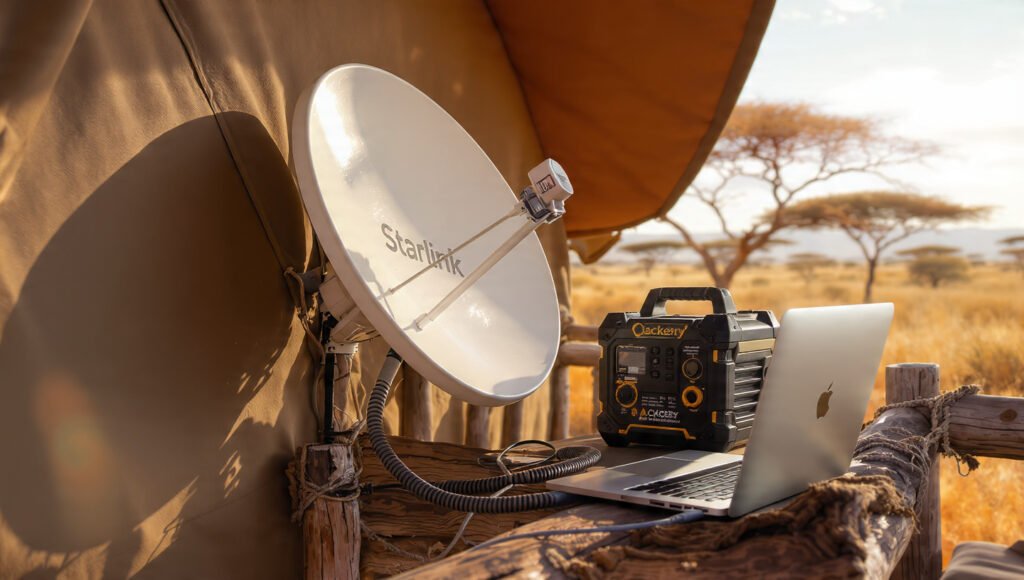
Starlink showing up in Kenya? Total game-changer. Before, if you were tucked away in a remote safari camp, you had to deal with those clunky, slow, and crazy expensive VSAT setups. Now these places are sticking up Starlink dishes and suddenly, you’re uploading huge files, working on 4K videos, zooming from the wild like you’re in Nairobi’s CBD. It’s insane. Even the monkeys probably have better internet than some city flats.
2. 4G/5G In The Wild
And it’s not just satellites. Safaricom and Airtel have been on a serious mission—4G LTE is pretty much everywhere. You could literally be livestreaming a lion hunt in the Mara and your phone’s still showing full bars. For digital nomads, that’s the dream: If the lodge Wi-Fi drops (and it will, accept it), just tether to your phone and you’re good to go. No more panicking when you freeze mid-client calls.
Honestly, the infrastructure glow-up is next level. Five years ago? No chance. Now? You could easily run a startup from a tent, as long as you don’t mind the odd giraffe photobomb.
The Essential Tech Stack for the Modern Nomad Safari
Working from the wild is a different experience than working from some coffee shop in Bali. The environment is more challenging — dust, heat and bright sunshine are all things you control. To make sure your productivity keeps up with your adventure, you need a ruggedized tech stack.
1. Power Management:
The Lifeline Luxury lodges have 24/7 power, but game drives do not. To avoid being derailed, these are what you require:
- Portable Power Stations: Without a device such as the EcoFlow River or the Jackery Explorer, your ability to work from a vehicle will be severely limited. They are capable of charging laptops, drones and cameras all at once.
- Solar Power Banks: Harness the power of the African sun. A large capacity solar power bank (20,000mAh+) will keep your phone and hotspot alive for a day of driving.
2. Connectivity Hardware
- Signal Boosters: A portable vehicle signal booster—think WeBoost—can turn “No Service” into solid LTE, even way out in the bush.
- Local SIM Cards: Grab a Safaricom SIM card as soon as you land at Jomo Kenyatta International Airport. It’s your best bet for coverage inside the national parks.
3. Protection and Ergonomics
- Dust Covers: East Africa has some of the finest dust you’ll ever meet—and it’s got a special affection for keyboards. Grab a silicone keyboard cover and a dust-proof laptop sleeve. You’ll thank yourself later.
- Noise-Canceling Headphones: The bush isn’t actually quiet. Cicadas buzz nonstop, and guests can get pretty chatty. If you need to take work calls, active noise-canceling headphones aren’t just nice—they’re essential.
Top 3 Safari Spots for Working Remotely
Not every safari park makes it easy to work and explore at the same time. But if you want solid Wi-Fi and comfortable spots to set up your laptop, these places stand out:
1. The Maasai Mara: The All-Around Favorite
- Why it’s great: There’s a ton of luxury camps here, so each one tries to outdo the others when it comes to amenities. You’ll find business centers, strong Wi-Fi—even in your tent sometimes.
- Who’ll love it: If you’re a creative person who needs a fresh perspective, this is your place. The endless landscape really gets your ideas flowing.
2. Ol Pejeta Conservancy: The Tech Hub
- Why it works: Ol Pejeta stands out in conservation tech. Their rangers use digital radios and monitoring tools to keep track of rhinos, so the whole conservancy stays connected—way better than what you’ll find in most national parks.
- Best for: Tech lovers and data analysts who want reliability.
3. Watamu & Diani: The Bush-to-Beach Circuit
- Why it works: After a week out in the dust, plenty of nomads end up at the coast. The Kenyan coast has fast internet and decent co-working spots, so you can pull off this “Bush and Beach” way of working pretty easily.
- Best for: Longer stays—think two to four weeks.
Trying to juggle work and adventure isn’t always simple. Honestly, it helps to talk to people who get it. Companies like Gemfinders Safaris know what remote workers need when it comes to tech, so reach out to them if you want things to run smoothly.
The “Wild Routine”: Balancing Grind and Game Drive
It’s easy to get trapped behind your laptop and forget you’re even on safari. The trick? Build a routine that fits the land.
- 05:30 AM – 09:00 AM: The Morning Drive
- Unplug everything. Seriously. This is when predators roam and the light’s perfect for photos. Leave your laptop locked up and just enjoy it.
- 10:00 AM – 01:00 PM: The Deep Work Block
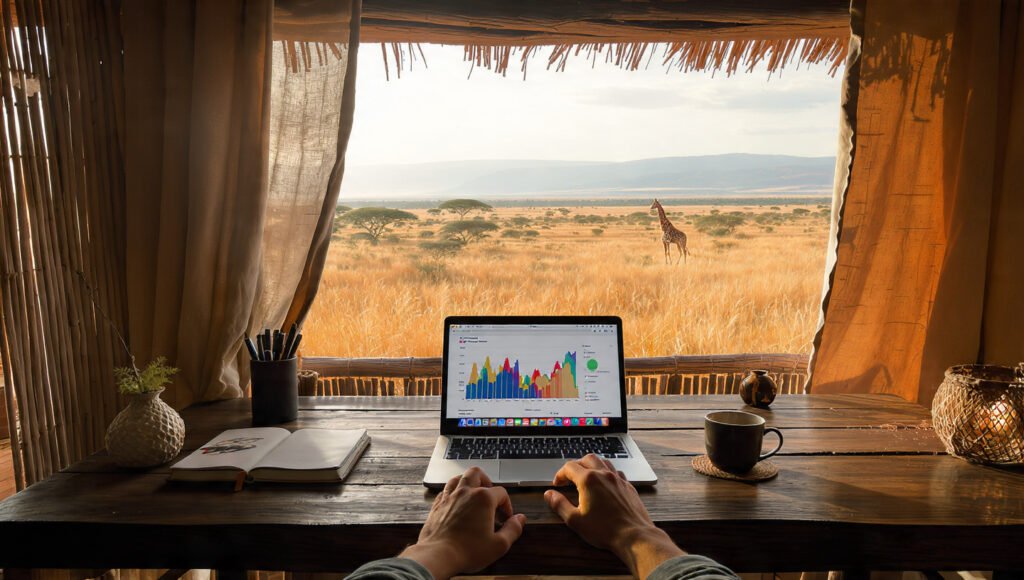
- By mid-morning, the animals are hiding from the sun. That’s your window to focus. Grab a coffee in the lodge lounge and knock out your hardest work.
- 01:00 PM – 02:00 PM: Lunch & Networking
- Safari lodges bring together a wild mix of people—entrepreneurs, conservationists, travelers. Lunch is for swapping stories and making connections, face to face.
- 02:00 PM – 04:30 PM: Admin & Calls
- It’s hot, animals are napping, and you can catch up on emails or hop on Zoom. Pro tip: take the call with the plains in the background.
- 05:00 PM Onwards: Sundowners
- Shut the laptop. This is sunset time and it’s a ritual here. Go for a drink, take in the view, and maybe join the evening drive.
Sustainable Tech: How Innovation is Saving Wildlife
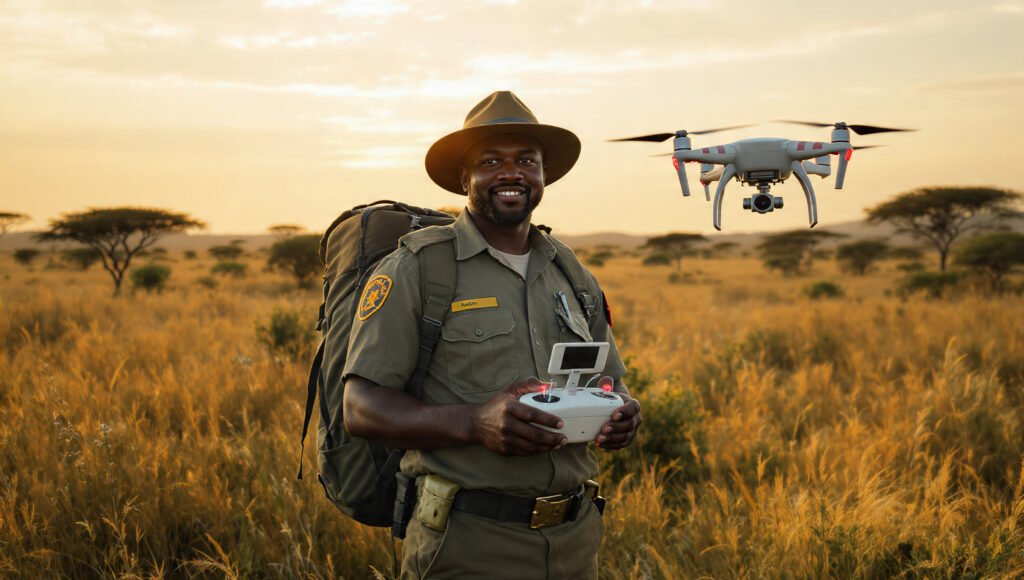
It’s wild to see the same tech we use for work making a difference for wildlife. Kenya’s pushing boundaries with “Smart Parks.”
- Drones for Good: Rangers fly thermal drones at night, spotting poachers and protecting rhinos with a digital fence.
- AI Camera Traps: Artificial intelligence sorts through camera trap footage, identifying animals and tracking their health—no need for people to get in the way.
- Citizen Science Apps: Now, tourists can snap photos of lions or wild dogs and upload them. Researchers use these pics to follow migration patterns with pattern-recognition software.
When you visit these tech-focused conservancies, your travel dollars actually help keep all this digital infrastructure running.
Offices? Old news. This “Digital Nomad Safari” isn’t just trendy—it’s a real look at the future of work and travel. You can chase your career and see the world at the same time. With the right setup and a sense of adventure, you can swap that desk for a Land Cruiser.
Kenya’s ready. The Wi-Fi is fast. The coffee’s strong. And the view? It’s way better than any screensaver.







Leave a Reply