
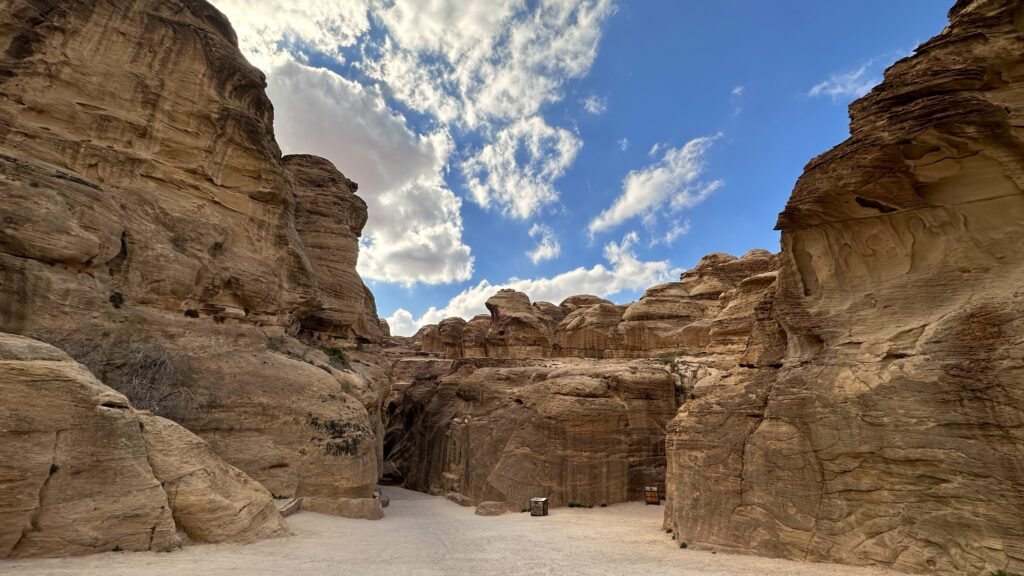
I first discovered Petra in the pages of history books, where tales of an ancient city carved into rose-red cliffs captured my imagination and made me curious about the extraordinary mysteries hidden among them.
Years later, that childhood fascination finally became a reality. My journey began aboard Royal Jordanian’s direct flight from Mumbai to Amman, transporting me from the bustle of everyday life to the heart of a country where history was embedded in every stone. As I gazed out of the window, watching the landscapes of the Middle East unfold beneath the wings, I found myself smiling. Everything, from the warm hospitality of the cabin crew to the spacious comfort and delicious food, I just knew… this adventure was going to be one of the most extraordinary experiences.
As we made our way to Petra, my thoughts drifted back to everything I had read over the years.
I knew the Nabataeans once walked these very streets. I knew the city had flourished as one of the ancient world’s greatest trading hubs. I knew of the famous Treasury and the way it made people’s jaws drop in awe. The facts were familiar. Yet standing at the entrance of the Siq, the narrow canyon leading to Petra’s heart, all of the facts faded. The rock walls rose up around me, and I was completely spellbound, suddenly feeling small against the weight of a history I was finally about to touch.
I tilted my head up, admiring the red sandstones and the narrow paths where every bend revealed new colours in the rock- deep reds, burnt orange, soft pinks, and brilliant rust, all of it shaped over millions of years by water and wind. Around me, visitors from every corner of the world paused, lifting cameras, running their hands across the stone, and speaking in hushed excitement.
I looked down at my feet, wondering if this was the exact path countless Nabataeans had walked centuries before. Merchants and travellers arriving after months of crossing the Arabian Desert, bringing spices and myrrh from distant kingdoms.
After all, long before Petra became one of the world’s greatest archaeological treasures, it was simply a place filled with families like ours.
I traced my fingers along the sandstone wall when a sudden, sharp rush of wind whipped through the canyon. I stumbled a little, reaching out to steady myself. Dust swirled briefly around my feet, and I instinctively closed my eyes.
After a few heart-pounding seconds, I opened them again, only to gasp in shock.
The familiar sounds of tourists had vanished. So had the cameras, backpacks, and guidebooks. The canyon ahead was suddenly crowded, but with different faces and way different clothes.
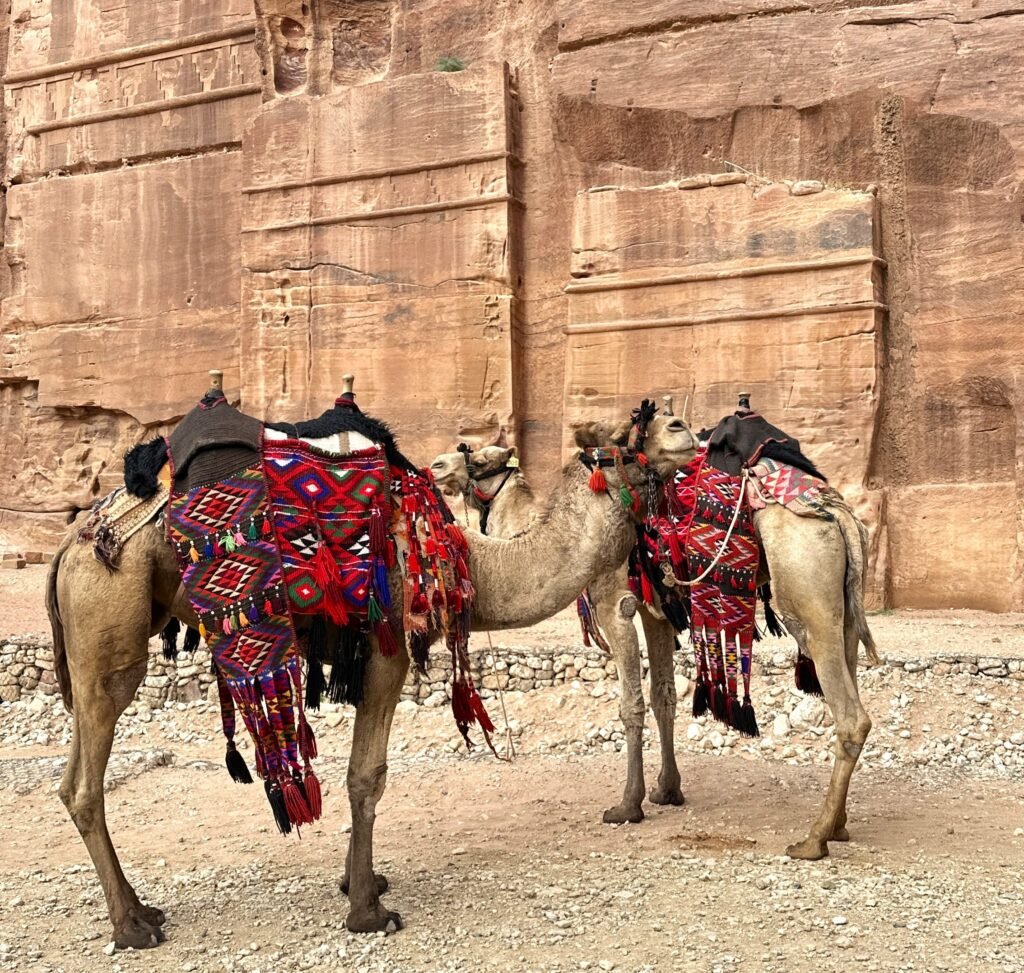
I blinked at the scene. Dozens of camels, their humps piled high with heavy sacks, paced forward with slow, rhythmic grunts. Merchants wearing loose-fitting tunics spoke enthusiastically as they guided their caravans through the narrow passage, while children laughed and ran as though this bustling route was their playground.
I breathed in the unmistakable scent of spices, leather, incense, and freshly baked bread that drifted through the warm desert air.
I glanced at the stone I was touching, now a lot brighter, less eroded, its details pristine. And I realized that I was in Petra of the first century BC, the absolute zenith of the Nabataean Empire. I wasn’t looking at ruins- I was looking at a living metropolis.
I listened breathlessly to the dizzying cacophony of languages, dialects of ancient Arabic and Aramaic cutting through the canyon. Frankincense and myrrh from modern-day Yemen and Oman, pepper and cinnamon from India, luxury silk from China, prized gems and jewelry passed through this city in astonishing quantities, bringing immense wealth to the Nabataean Kingdom. I watched a merchant run his fingers through a handful of uncut pearls, his face split in a wide grin. Looking at the endless stream of traders before me, it suddenly became easy to understand how Petra earned its reputation as a thriving crossroads of civilisation.
Quietly, I followed them, my heart hammering against my ribs.
Then I heard it, the steady rhythm of chisels striking stone.
My eyes widened as the Siq opened and I finally saw it – the Treasury, except it was still under construction.
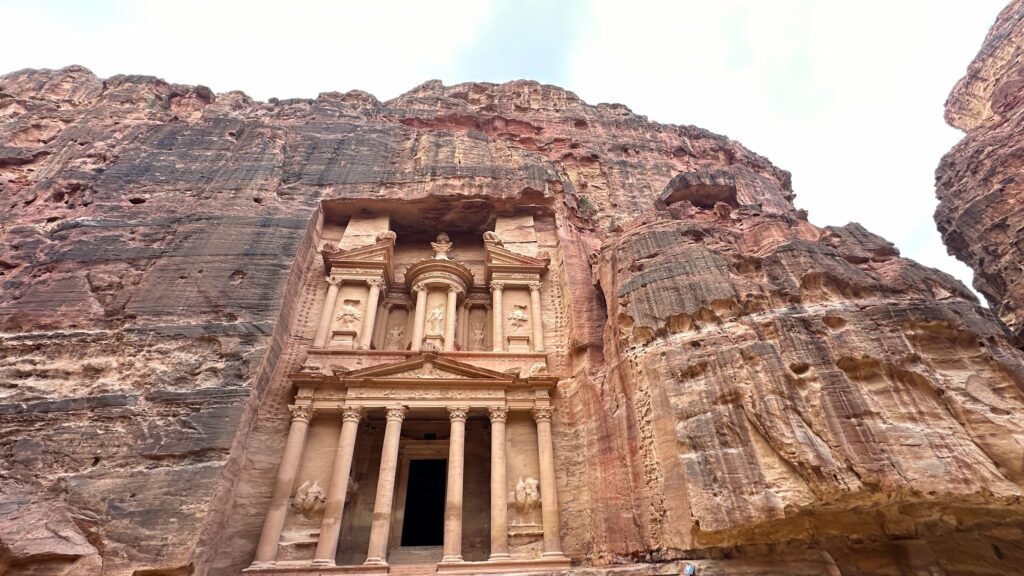
High above me, craftsmen stood on rock ledges carved from the top down against the towering cliff faces, carefully carving elaborate columns, façades, and statues directly into the rock itself. There were no machines, no cranes, and no modern engineering equipment. Every intricate detail emerged through patience, skill, determination, and countless hours of manual labour.
I watched the skilled workers hammer iron chisels into the cliff. They thought they were making a monumental royal tomb. They had no clue they were actually creating one of history’s greatest architectural achievements that would become a bucket list for millions of travelers thousands of years down the line.
And as I looked more closely, I noticed narrow channels carved into the canyon walls, directing water towards reservoirs hidden throughout the city. Living in one of the driest regions of the world, the Nabataeans had developed an advanced system of dams, cisterns, and aqueducts that captured seasonal rainfall and stored it for months. This remarkable feat of artistic vision and ingenious engineering is what made Petra a happy and flourishing home for thousands of people.
A sudden blast of a horn shattered the scene. The city before me had changed once again. The familiar sandstone façades remained, but new architectural details began appearing around them.
It was now the early second century AD. The Romans had arrived. The independent Nabataean kingdom had been formally annexed under Emperor Trajan, and the city was adapting to the will of Rome. I watched a crew of Nabataean workers, their faces streaked with grey stone dust and sweat, hauling massive limestone blocks up a wooden ramp to construct a triumphal arch, now known as the Hadrianic Gate. They worked in a strange, tense rhythm alongside Greek architects who held rolled parchment blueprints, arguing over the alignment of a column base.
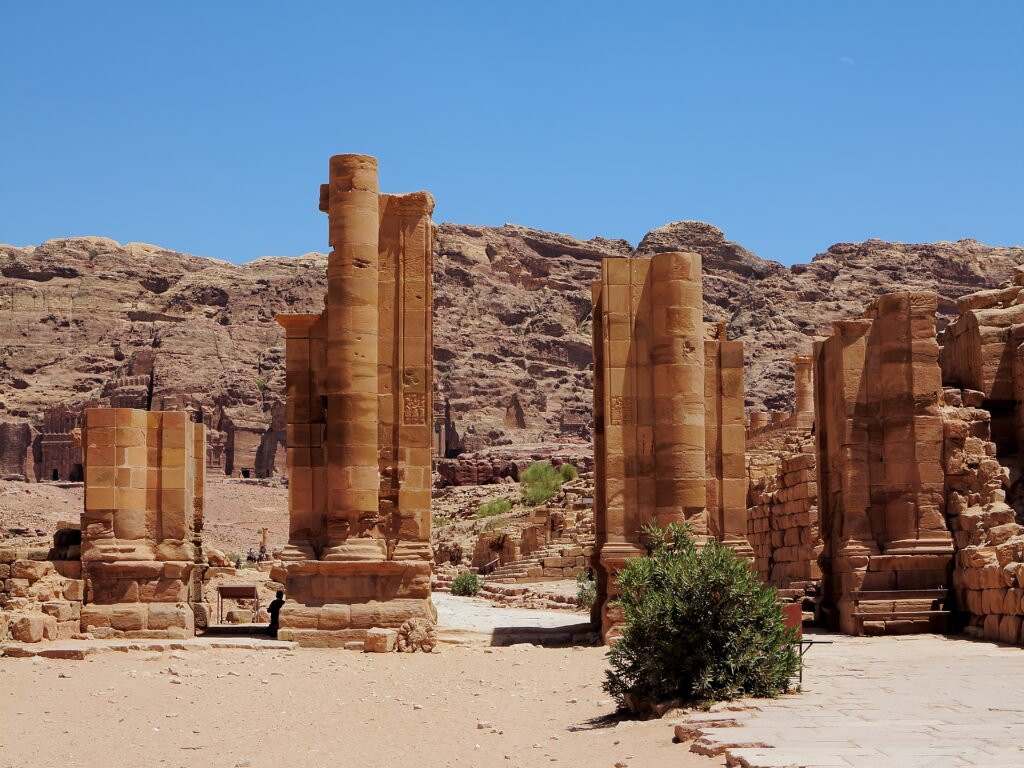
The classic Nabataean crow-step patterns on the older buildings were left as is, but all the new structures had the familiar symmetry of Roman Corinthian capitals. This transition created a fascinating mix of architectural styles and cultural traditions. It was proof that civilisations overlap, adapt, but leave traces of themselves long after political boundaries disappear.
Two men in finely woven linen tunics hurried past me, their conversation flowing in rapid Greek. Instinctively, I pressed my back to the stone just as a deep rumble started beneath my feet.
The columns around me groaned. The sky turned an unnatural, bruised shade of purple-grey. Market stalls collapsed, and camels pulled against their ropes. The voices that had filled the streets only moments earlier suddenly turned into frantic cries of fear.
I stood frozen, and it took me a second to realize what day this was- May 19, 363 AD, a date seared into the geological memory of the Levant.
The 363 Galilee earthquake had struck. Petra, would survive this disaster, but it would never be quite the same again.
The ground lurched violently sideways. I saw a massive stone block from the upper tier of the Great Temple snap away and crash into the plaza below, exploding into fragments. People screamed, running wildly into open spaces as the earth rippled like water. Walls that had stood for centuries began to buckle and slide down like sandcastles. The monumental columns erected by the Romans collapsed in a thundering cloud of white dust that swallowed the street.
I watched in absolute horror as a mother tried to drag her child away from a falling colonnade, but before the debris could strike, the dust blinded me completely, choking my lungs and forcing me to my knees.
The scene fast-forwarded as trade routes changed, markets collapsed, wealth faded, families left in search of new opportunities, and the city that had once welcomed travellers from across the ancient world became increasingly silent.
The wind swept across the valley once more, and centuries of prosperity faded away in an instant.
When the dust settled, another traveller appeared.
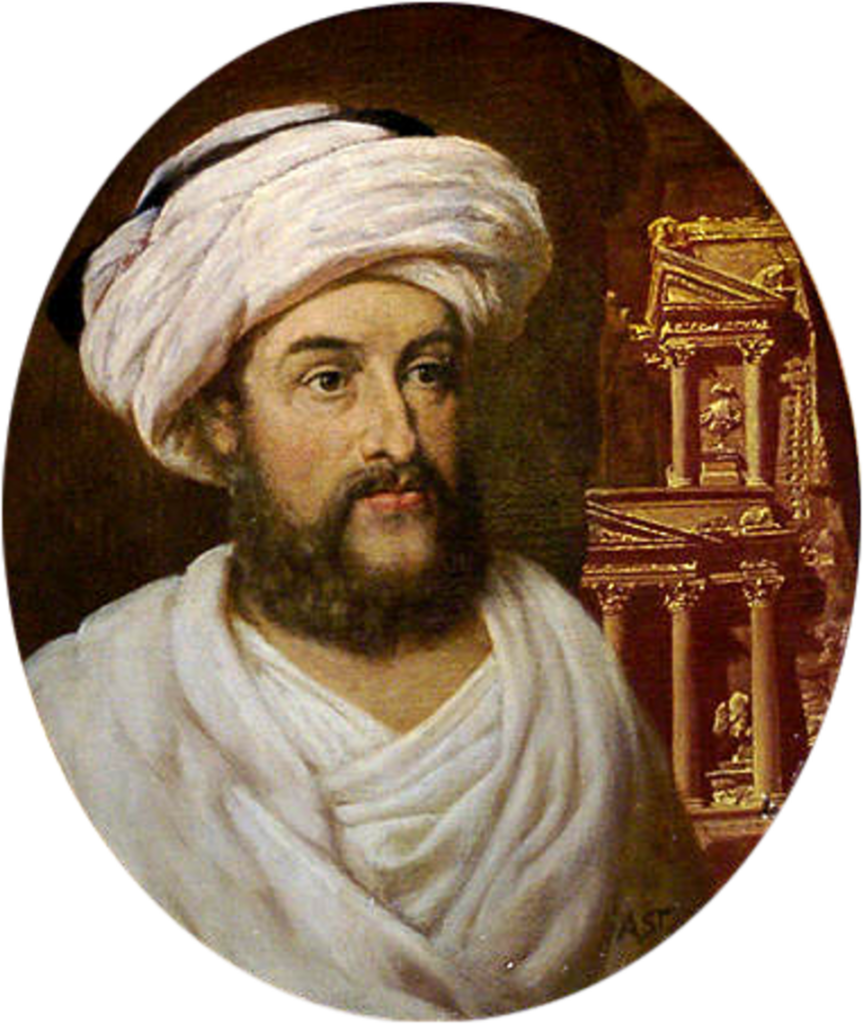
Unlike those before him, he looked strange in the ancient surroundings. He moved cautiously, studying every carved façade with disbelief, stopping frequently to observe the sandstones and the forgotten arches. Although I had never met him, I knew exactly who he was.
It was August 1812, and Swiss explorer Johann Ludwig Burckhardt had just become one of the first Europeans in centuries to document Petra after disguising himself as an Arab traveller. He had heard whispers of a forgotten city hidden among the mountains, but nothing could have prepared him for the magnificent sight before him.
Watching him stand next to a local Bedouin tribe, his eyes full of amazement, I smiled.
He had no idea that Petra would become one of the world’s most celebrated archaeological sites. He couldn’t have imagined that millions of visitors would one day follow the same winding path through the Siq, hoping to experience the same sense of wonder that now filled his face.
Then, another familiar sound pulled me back.
Crisp, familiar English words. A guide explaining Petra’s history. A couple posing for a photo with a camel draped in colorful Bedouin blankets.
The modern world had returned.
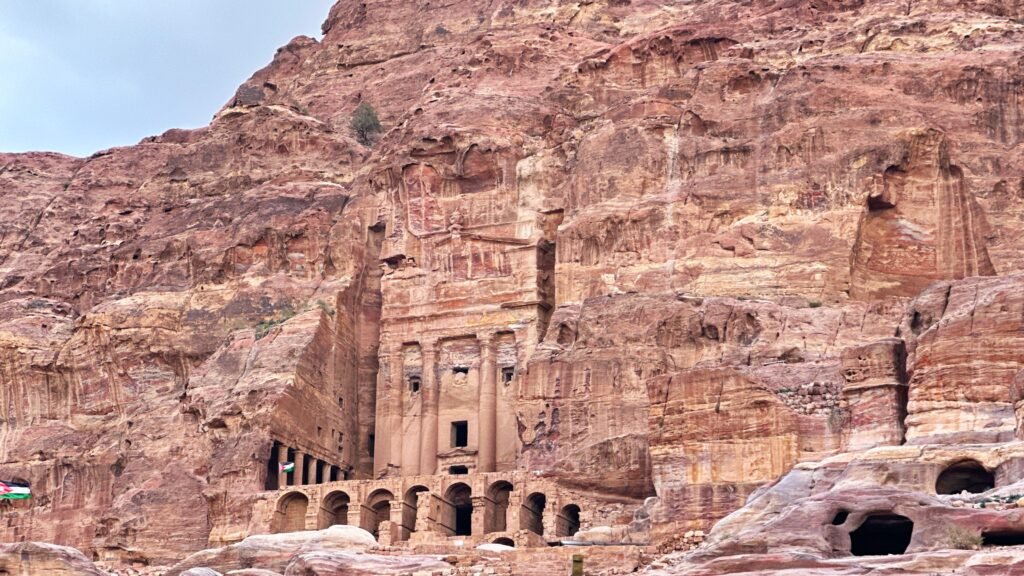
The magnificent façade of Al-Khazneh stood exactly where it always had, glowing beneath the afternoon sun as visitors paused to admire one of the New Seven Wonders of the World. But I found myself drawn to the weathered staircases climbing into the hills, the faded carvings softened by time, and the countless cave dwellings scattered across the landscape.
Where I stood was once home to thousands of people. Every temple, house, and public square had witnessed celebrations, heartbreak, ambition, success, and loss.
Petra has often been called the Lost City and one of the greatest archaeological treasures on Earth. But it is also a civilisation that mastered one of the harshest landscapes on Earth, connected distant cultures through trade, pioneered remarkable engineering solutions, and created a city whose legacy continues to inspire the world centuries later.
I smiled and took one last look at the Treasury, knowing that if I listened closely enough to the shifting desert wind, I could still hear the faint, echoing laugh of a home that was lived, loved, and lost, but left behind for us to admire and respect.






Leave a Reply