

At TOURISE 2025 in Riyadh, leaders from across aviation, hospitality, tech, sports, and culture gathered to answer a simple but urgent question: What comes next for global travel? The conversations I had and the sessions I attended made one thing clear – travel is no longer just about flights and hotels. It’s about meaning, connection, personalization, heritage, smarter systems and experiences that genuinely matter.
AI is accelerating faster than the industry can keep up, new traveler behaviors are reshaping demand, and destinations are rewriting their identities to stay relevant. From mega-events to slow travel, wellness retreats to intelligent journeys, these emerging trends are defining the next decade of exploration.
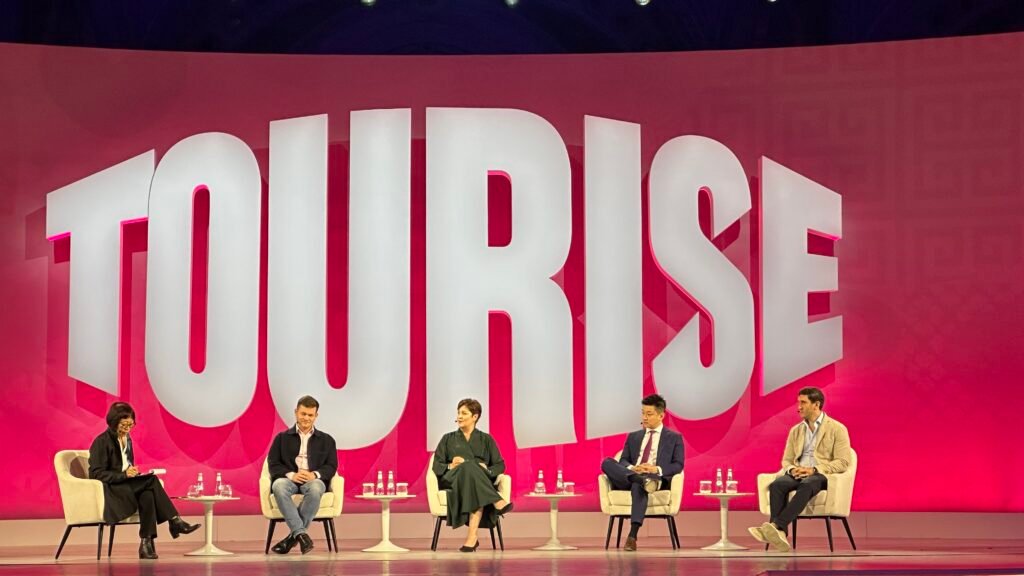
Cultural, Immersive & Meaningful Travel
More and more travelers are moving away from checklist tourism and rushing between landmarks. They want to feel the heartbeat of a place, meet its people, understand its roots, and slow down enough to truly absorb it. Technology, especially AI, is becoming a surprising catalyst here, not by replacing authenticity, but by enhancing access to it.
The panels explored how AI-powered companions, interactive storytelling, and immersive virtual layers can help travelers engage more deeply with culture rather than just observe it. Whether it’s AI narrating heritage stories during a city walk, or virtual previews that help visitors choose meaningful experiences, the goal is to elevate – not automate.
Dr. Miguel Sanz, General Director of the Spanish Tourism Institute and President of ETC, emphasized that communities must be at the center. After building strong tourism economies, destinations now need to ensure locals help shape and benefit from the visitor experience. Ahmed Bin Abdulaziz Al Sulaim, CEO of Jeddah Central, said Jeddah’s tourism strategy focuses on creating genuine visitor experiences as the destination offers a diverse range of attractions beyond beaches. H.E. William Rodríguez López, Minister of Tourism of Costa Rica, shared how Costa Rica’s “Pura Vida” philosophy naturally embodies slow, immersive travel by connecting visitors to local people, biodiversity, and daily life.
For travel agents, it opens a chance to curate deep, story-rich itineraries grounded in heritage, sustainability, and local connection.
Sports, Concerts & Mega Events
Sports tourism has always been influential, but now it is emerging as one of the most powerful engines of global tourism. From the FIFA World Cup to Formula 1, and even pop culture like Taylor Swift’s Eras Tour, mega events are reshaping travel patterns, boosting international arrivals, community pride, and reframing global perceptions of host destinations.
H.R.H. Abdulaziz bin Turki bin Faisal Al Saud, Saudi Arabia’s Minister of Sports, spoke about how sports have become a unifying force in Saudi Arabia. Cristiano Ronaldo, now a proud Saudi resident, is bringing global attention, fandom, and economic uplift. Stéphane Lefebvre, CEO of Solotech, explained how advanced audiovisual technology and immersive staging allow events to scale globally, creating broadcast-quality experiences that draw both physical and virtual audiences.
Smart ticketing, real-time crowd management, and AI-powered itinerary allow both hosts and visitors to make the most of mega events. Travel advisors, in particular, can design bespoke packages around sporting calendars, combining cultural immersion, local experiences, and tech-enhanced fan engagement to make the best of such events.
Cruise Travel: Sailing Into Tomorrow
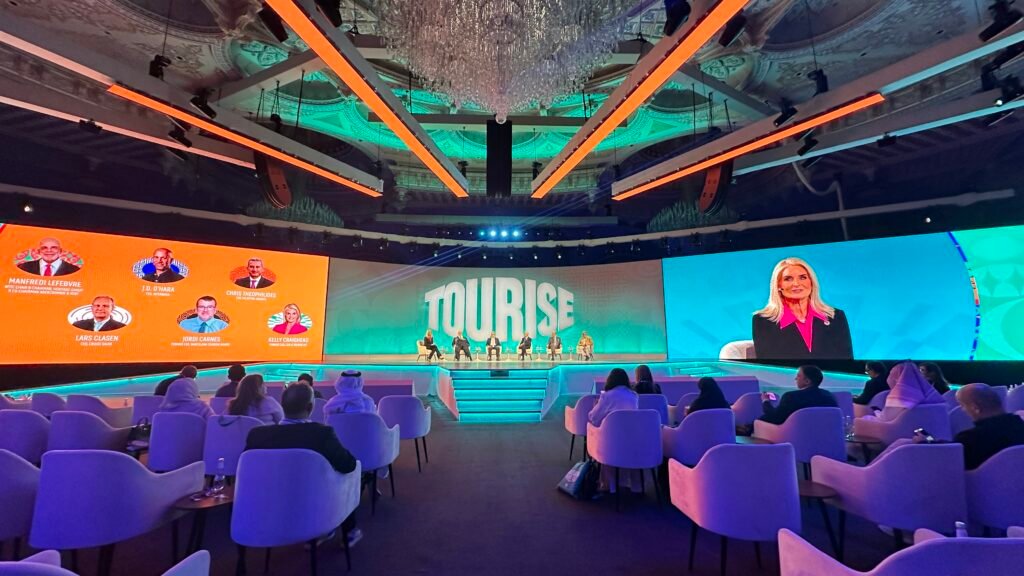
Another major theme that stood out for me at TOURISE 2025 was the remarkable rise of cruise travel. What used to be perceived as a niche or seasonal vacation choice has now evolved into one of the fastest-expanding segments in global tourism. Cruises today are floating cities with fine dining, wellness programs, Broadway-level entertainment, and carefully curated cultural experiences at every port.
Manfredi Lefebvre, WTTC Chair and Executive Chairman of Heritage Group, offered a strategic view on how investment, innovation, and diversification are driving cruising’s next chapter globally. J.D. O’Hara, CEO of Internova Travel Group, shared the continued importance of travel advisors in guiding customers to the right cruise experiences. Chris Theophilides, CEO of Celestyal Cruises, captured the heart of the experience: “Cruising isn’t transportation- it’s a lifestyle.” Lars Clasen, CEO of Cruise Saudi, shared how Saudi Arabia is emerging as an exciting new cruise destination, backed by heritage investment, innovation, and hospitality-driven development.
With more AI data-driven personalization, the next generation of cruises won’t just be luxurious, they’ll be smart, responsive, and hyper-personalized, more focused on a seamless travel experience. It is important for cities and cruise lines to collaborate and ensure that this growth benefits local communities while maintaining sustainability.
Wellness Tourism: The Rise of Longer, Healthier Travel

Wellness tourism is shifting in a big way, and this movement is no longer about spas and surface-level relaxation. The sessions showed that this is a far deeper, more scientific, and more emotionally anchored trend. It is driven by burnout, digital overload, chronic stress, and a growing global awareness of longevity and mental well-being.
Destinations are responding with programs rooted in neuroscience, nature, nutrition, and mindful living, making wellness one of the strongest forces shaping future travel.
Professor Gerry Bodeker, a Harvard-trained researcher from Oxford, brought scientific depth, especially around mental wellness. Ingo Schweder, CEO of GOCO Hospitality, shared his insights on how modern travelers are looking for more than massages and spas – they want health programs, personalized nutrition, recovery therapies, and emotional wellbeing journeys that are rooted in authenticity.
Anne Biging, CEO of Healing Hotels of the World, spoke passionately about ethical wellness and the need for truth in marketing. Wellness brands have a special responsibility not to exploit pain or insecurity.
A moment of stillness, a genuine human connection, the scent of a natural space, or the taste of clean, nourishing food can be the greatest indulgence. With the rise of AI, Virtual wellness companions can also help travelers stay mindful, meditate, or track their emotional wellbeing. Wellness, ultimately, is becoming both a lifestyle and a new definition of luxury in travel.
Intelligent, Seamless Journeys
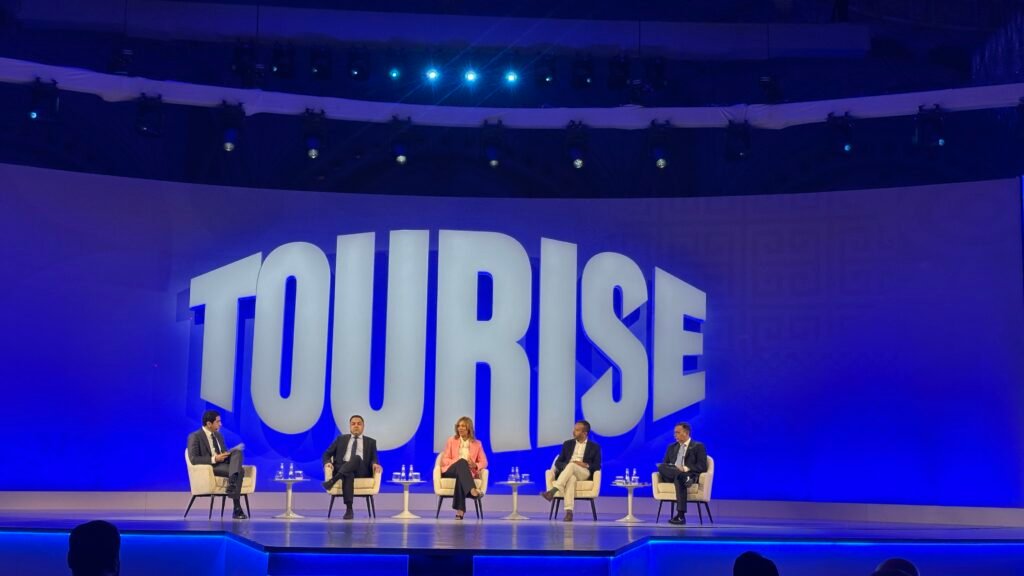
The future of travel is moving toward a frictionless ecosystem and seamless service is now the minimum expectation. But even as technology takes over repetitive tasks, the real differentiation will come from human warmth, thoughtful hospitality, and experiences that feel genuinely cared for.
Sarmad Zok, CEO of Kingdom Hotel Investment, emphasized how AI-driven recognition systems, loyalty programs, and intent-based personalization will redefine consumer engagement. Hotels can anticipate needs, preferences, and even mood patterns. Gilda Perez Alvarado, CEO of Orient Express, echoed this, describing AI as an enhancer rather than a disruptor. The future is about hyper-customized stays where every guest feels the experience was uniquely crafted for them.
Meanwhile, travel infrastructure is becoming more intelligent. Zubin Karkaria, CEO of VFS Global, showcased how AI is revolutionizing visa processing through advanced documentation verification, fraud detection, and the VFID “visa at your doorstep” service, allowing applicants to complete biometrics from home.
Christopher Sanderson, co-founder of The Future Laboratory, also said, “AI, when rooted in brand values and deployed with care, can unlock a new level of anticipatory, emotionally intelligent service and make every guest feel known, valued, and at home, wherever they are in the world.”
Seamless journeys will define the next era of travel – but human hospitality should remain the heart of it.


Leave a Reply