
Jordan is a country I had long dreamed about, one filled with ancient wonders, dramatic landscapes, and stories echoing in every corner. I thought I knew what to expect: a checklist of experiences, some good hummus, and a lot of sun.
But this historic Arab kingdom surprised me at every turn, with its beauty, its people, its resilience, its marvels, and its soul.
Here are eight moments when Jordan completely took my breath away.
1. The First Glimpse of Petra
Petra, one of the New Seven Wonders of the World, is an ancient city carved into rock, layered with history, mystery, and incredible human ingenuity.
Dating back over 2,000 years, Petra was the capital of the Nabataean Kingdom, a group of skilled traders who controlled key trade routes linking Arabia, Egypt, and the Mediterranean. It’s a vast area filled with tombs, temples, a monastery perched high above, and an ancient theater that once held thousands of people.
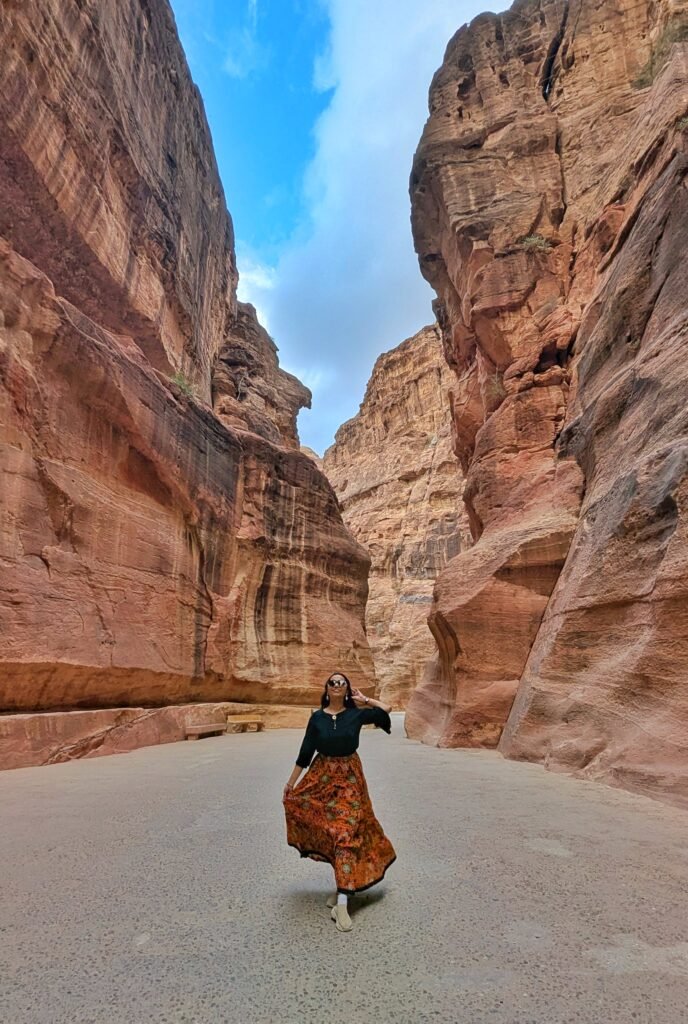
As we walked through the Siq, a geological masterpiece, split apart by tectonic forces and smoothed over millennia by flash floods, our guide, Abdullah, showed us their water management systems, and their sophisticated engineering is beyond immersive. The walls rise to 80 meters on either side, and the rocks went through shades of red throughout the day.
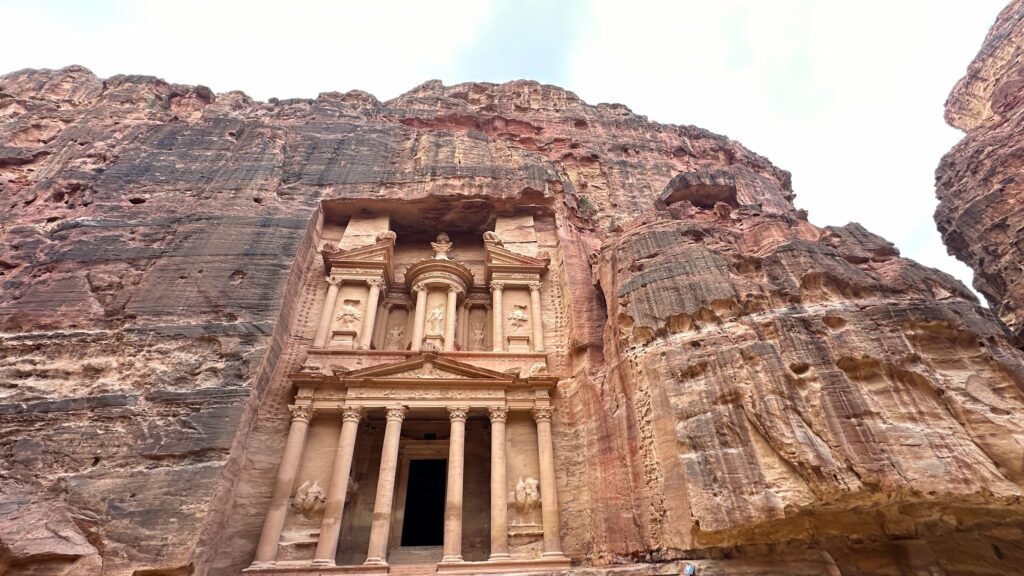
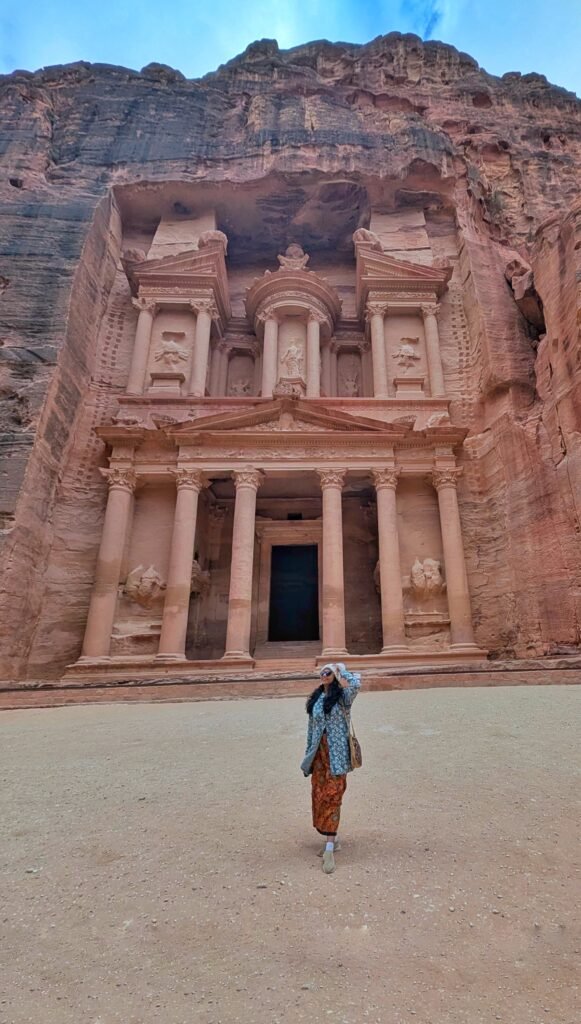
Finally came the much-anticipated moment when the Siq opened up, and The Treasury (Al-Khazneh) unveiled itself. It’s nearly 40 meters tall, but here’s the mind-blowing part: it was carved from the top down. Architects began at the top of the cliff, carving a ledge to stand on, and worked their way down the rock face.
Despite its name, the Treasury was never a bank. The massive urn crowning the façade still bears visible bullet marks, left by Bedouins in the early 20th century, who believed the legend that it concealed a Pharaoh’s hidden treasure and tried to break it open. In fact, even today, we are only scratching the surface of this city’s secrets.
I stood there for a few seconds, just taking in the beauty and history, my eyes traced the Corinthian columns and the weathered statues of ancient gods – I knew I had stepped directly into a dream I’d been having since childhood.
2. Defying Gravity in the Dead Sea
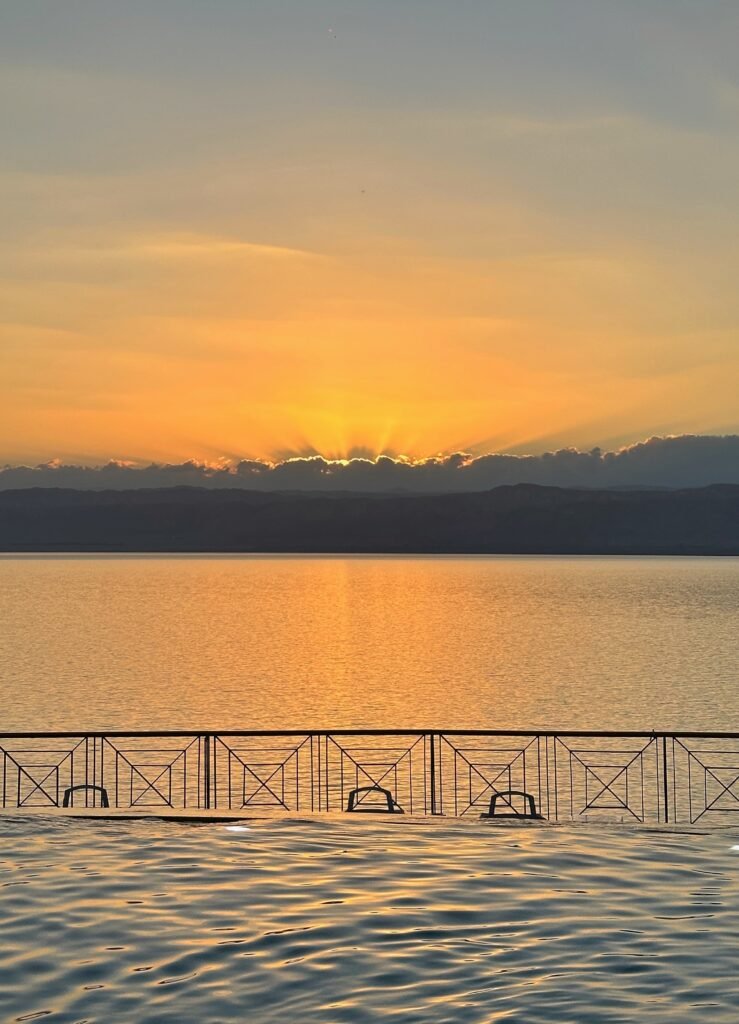
As a water baby, this was one experience I was really looking forward to. And it did not disappoint!
We checked into Mövenpick Resort & Spa Dead Sea. The property is beautiful with a traditional stone village design, rustic walkways, shops, and gardens. But I couldn’t wait to get into the water.
Sitting at over 430 meters below sea level, the lowest point on Earth, it’s famous for its incredibly high salt content, which is what creates this iconic floating experience.
We spent 10 minutes slathering ourselves in the famous black mineral mud, packed with magnesium, calcium, and potassium, known for its skin benefits. Legend has it that Cleopatra had cosmetics and ointments made from the mud and salts, and now I have tried it too!
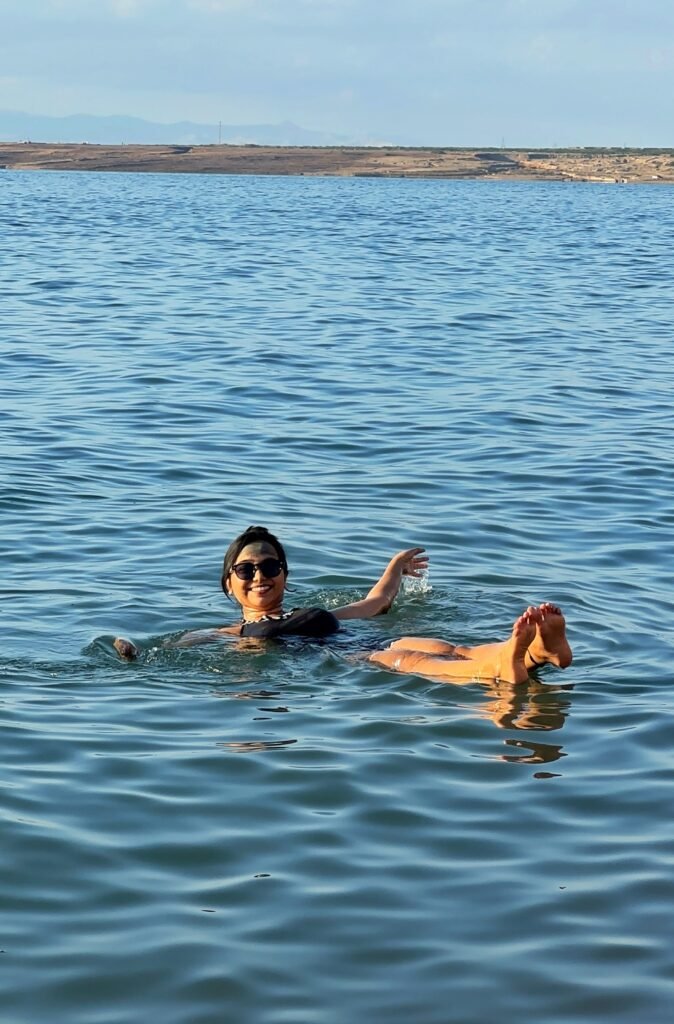
I let the mud dry under the sun and then started walking into the waters. I waded in up to my waist, took a deep breath, and leaned back. And just like that… I was floating.
For a second, I panicked out of habit, trying to adjust the way I normally would in the sea. But the Sea just swung my legs right back up to the surface. So, I let go, spreading my arms wide and allowing the buoyancy work its magic.
I stayed there for a while, admiring the hazy, shimmering blue of the Sea and the distant outline of the West Bank. It was a bizarre but deeply peaceful experience that I’ll forever remember and hope to float once again.
3. Mars on Earth: Wadi Rum
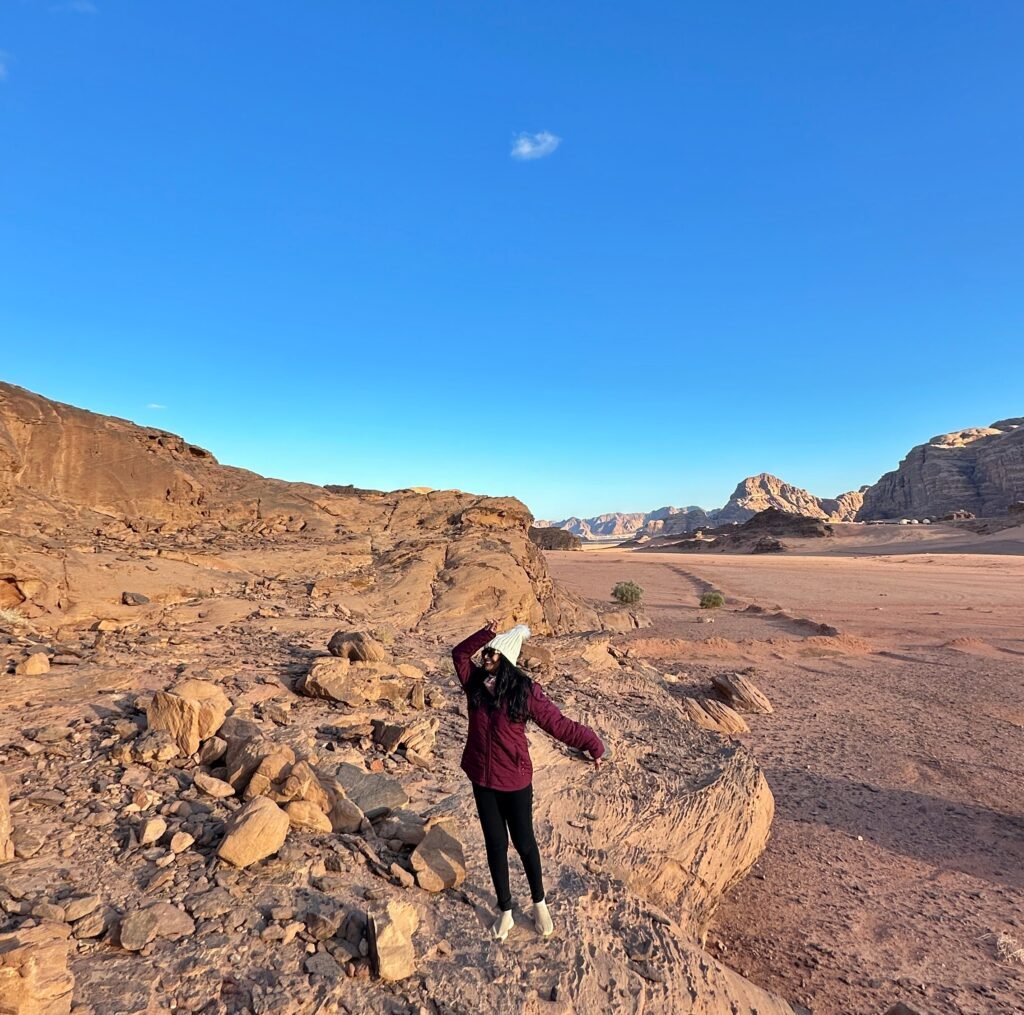
If Petra is Jordan’s heart, Wadi Rum is its soul. With its massive sandstone mountains and endless stretches of red sand, it’s no wonder Hollywood films like The Martian, Dune, and Star Wars were shot here.
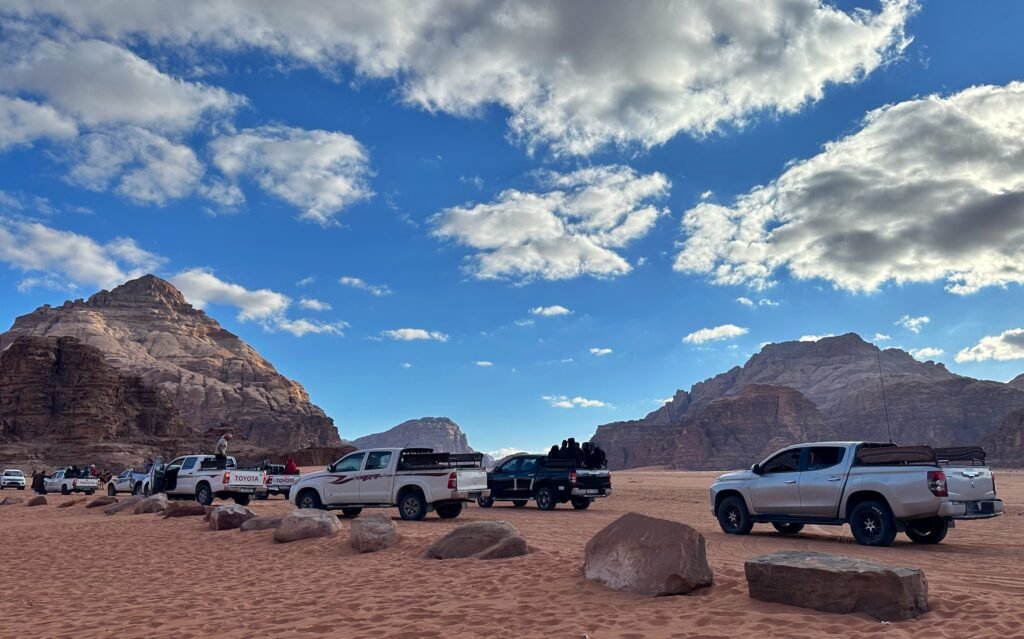
As we drove through the desert in a 4×4 jeep, our guide pointed out formations that had stories of their own. The geology is so alien, with towering blocks of sandstone, sculpted by millions of years of wind and flood, that I half-expected a spacecraft to greet us.
Another stop introduced us to a small desert plant, often called a “soap tree.” The guide crushed its leaves and added a bit of water, showing how it naturally foams, something Bedouins have used for generations.
Finally, we climbed up to the famous sunset viewpoint, a rocky ledge that looked out over a sea of dunes. The sky slowly turned soft shades of gold, then orange, then a surreal red. We stared silently at the mesmerizing scene, it’s a fleeting moment when you are struck by how vast and breathtaking this world really is, and how much of it we take for granted.
4. Falling in Love with Jordanian Food
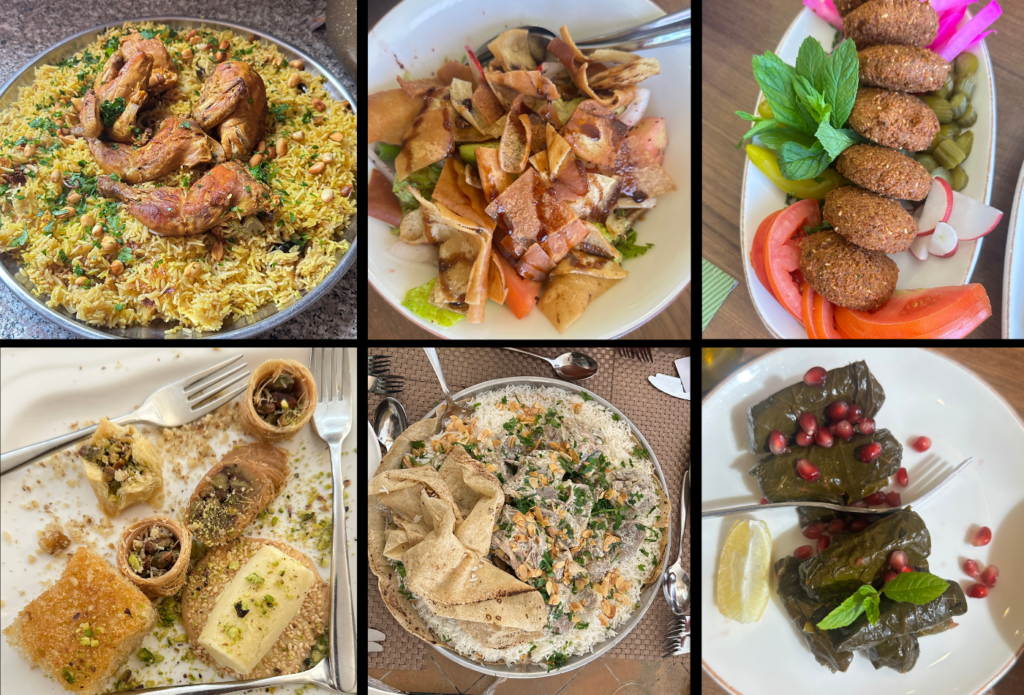
As someone who doesn’t eat red meat, I was afraid I’d have to survive on dates and veggies, but I couldn’t have been more wrong.
Jordan turned out to be one of the most flavourful, comforting food experiences I’ve had.
Hummus became a constant. Every meal, every table, we were welcomed with the creamy dish that somehow tasted better than the last. Pair that with warm, freshly baked bread, and it was hard to stop eating. I also tried mansaf made with chicken, which gave me a taste of Jordan’s national dish without stepping outside my comfort zone.
At Adonis, a beautifully restored traditional 20th-century Jordanian house, the Mezze dishes stole the show, fresh fattoush, Tabbouleh, smoky mouttabal, and aubergine dishes packed with flavour. During a homestay, we tried chicken maqluba, the famous “upside-down” dish, and it felt like a warm, home-cooked hug.
The Lebanese House served up the crispest falafel I’ve ever tasted and a dessert of Labneh with Walnuts. We also tried the Zarb, the traditional Bedouin-style meal cooked underground in the desert of Wadi Rum. And indulged in famous Jordanian Desserts like the kunafa, Baklava, and Qatayef. By the end of their, there was not a meal I had skipped or a dish I hadn’t relished.
5. A Slow Day in Aqaba
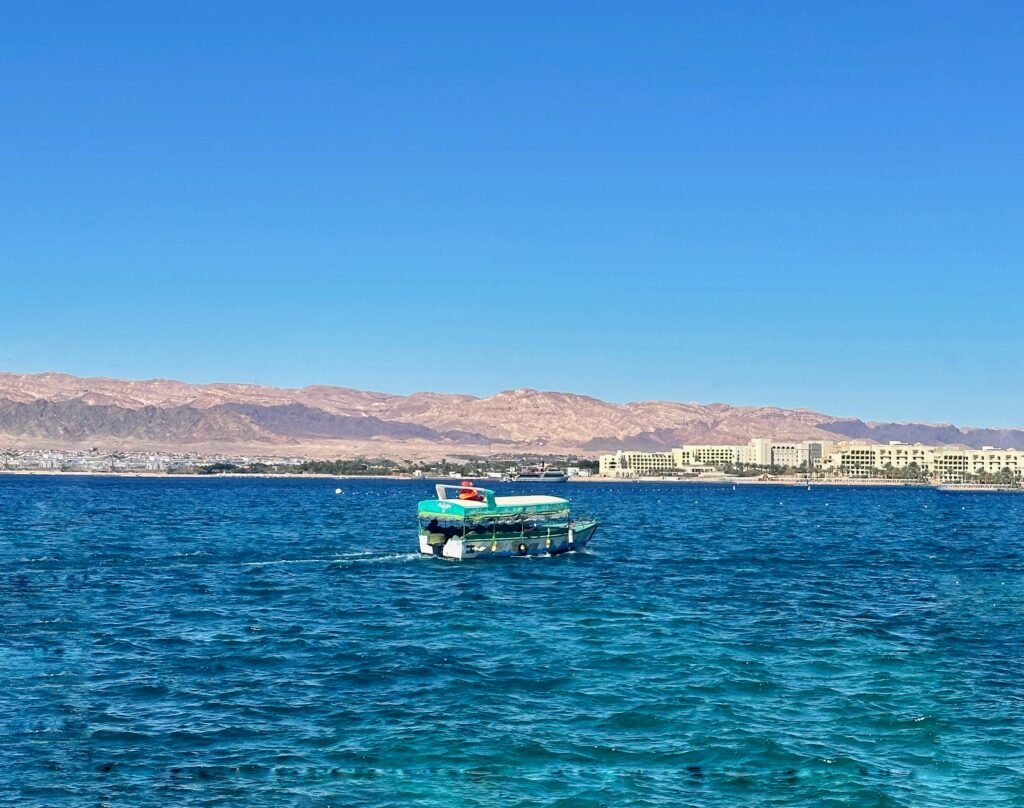
After the soft intensity of the Wadi Rum desert, arriving in Aqaba felt like a vibrant, breezy dream.
We set out on a boat ride across the Red Sea, drifting over the famous coral reefs and staring at the deep sapphire blue waters. The sea is incredibly rich in marine life, and while we didn’t do snorkelling, we did enjoy the wind on our faces and tracked the rugged coastline of the neighboring lands on the horizon. We could see the occupied Palestine sitting right there on the horizon – a surreal and deeply sobering sight to realize how thin the line is between this peaceful paradise and a land defined by its struggle.
Back on land, I walked through Ayla Oasis, a modern, thoughtfully designed space with cafés, clubs, and murals to evoke a “Greek island vibe,” but its roots go back to the 7th century as the first Islamic city built outside the Arabian Peninsula. Just a short stroll away sits the Aqaba Fort, originally a Crusader castle rebuilt by the Mamluks.
The brilliant stretch of blue and lively atmosphere makes it easy to understand why Aqaba is considered Jordan’s favorite coastal escape.
6. The Pompeii of the East – Jerash
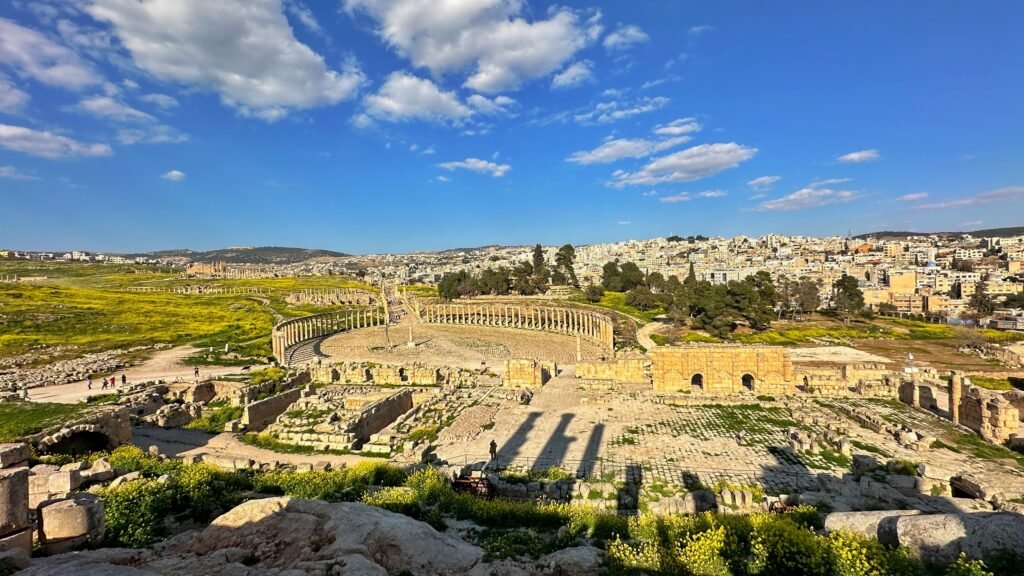
Often called one of the best-preserved Roman cities, Jerash dates back over 2,000 years, and the sheer scale of it left me speechless. It is a vast collection of monumental arches, temples, and theaters. We started at the massive Hadrian’s Arch, built in 129 AD to honor the Emperor’s visit, and then saw the Hippodrome and the stone-paved Cardo Maximus.
The Temple of Zeus is where the city’s layout is truly visible. It offers sweeping views of the entire site, rolling ruins framed by modern-day houses in the distance. I was awestruck by the architecture of the Oval Plaza, a stunning expanse surrounded by 56 Ionic columns that once buzzed with markets and gatherings.
But the real magic is in the details. Tucked away in the Byzantine churches, there are intricate mosaics that have survived for over 1,500 years, their colors still remarkably vivid despite the passage of empires.
In the South Theater, the acoustics are so perfect that a person standing in the center of the stage can be heard clearly in the very last row without raising their voice. Incredible!
It’s hard not to imagine the city as it once was – alive, loud, and full of stories.
7. Resilience Amidst the Storm
Travel doesn’t always go as planned.
During my time in Jordan, regional tensions escalated into conflict. It was sudden, unsettling, and honestly, a little frightening. There were moments of uncertainty, constantly checking updates, talking to friends and family back home, and wondering what it meant for us.
But what got us through it all were the people. Our guides didn’t panic once. They stayed calm the entire time, patiently explaining updates, checking in on us, placing a hand over their heart, and saying, “You are our guest, and you are safe here.”
And we believed them.
Even when our stay had to be extended by a day, the team at Crowne Plaza Amman did nothing but smile and reassure us that we’d reach home safely. It’s unexpected and daunting moments like that makes one realize that travel isn’t just about places. It’s about the kind people who make a foreign city feel like home.
8. Safe Journey with Royal Jordanian
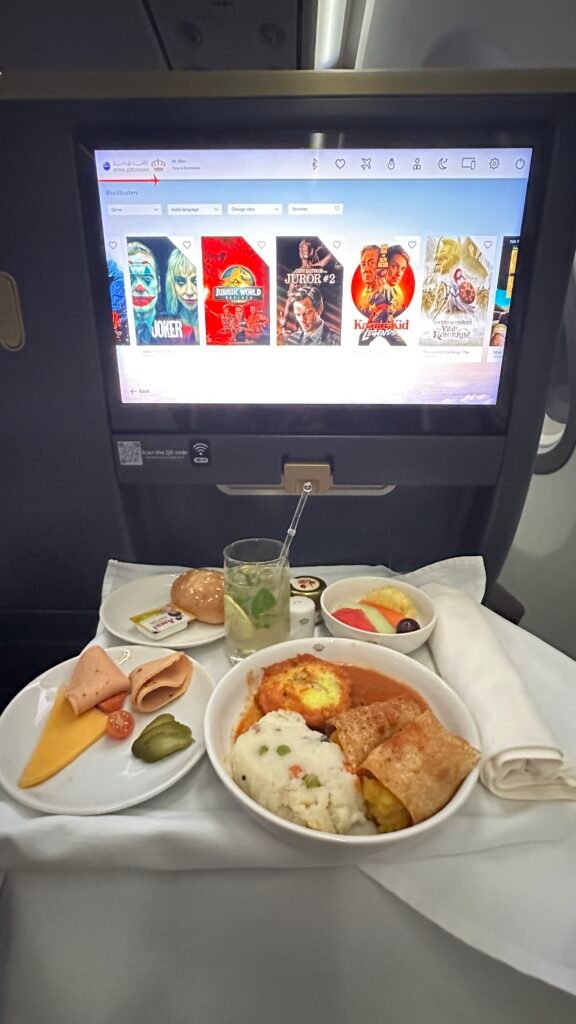
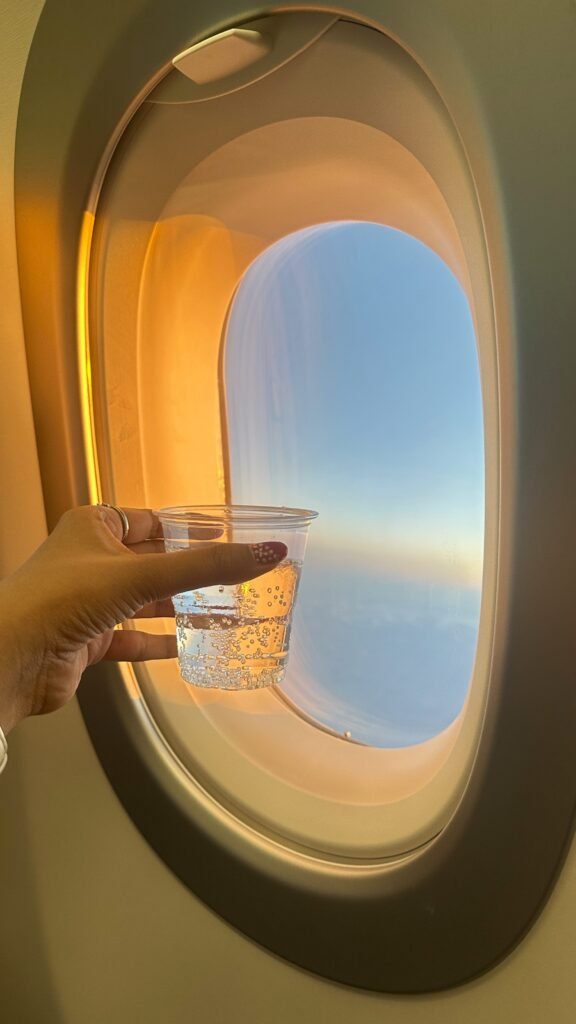
Even with the weight of regional tensions and the sudden escalation of conflict, Royal Jordanian, the national carrier, was exceptional, not just for the service, but for the constant communication during a time of such uncertainty.
We spent a few hours in the Crown Lounge at Queen Alia International Airport. Looking out through the massive glass windows, I felt the adrenaline finally start to fade. We ate from the many choices of food and drinks, recharged our phones and ourselves, and as the flight took off, and I watched the lights of Amman fade, I felt a strange ache in my chest.
The trip gave me more than landmarks and landscapes, it gave me perspective, connection, and moments I could never fully put into words. Jordan, in every way, left me completely in awe.
So it’s hard not to feel like a part of me is still back there, somewhere between the dunes of the desert and the deep blue of the sea.




Leave a Reply